Back
 Download Our Arcade Game flyer with all of our
Arcade Games, Dance DJ, & Mazes
Download Our Arcade Game flyer with all of our
Arcade Games, Dance DJ, & Mazes
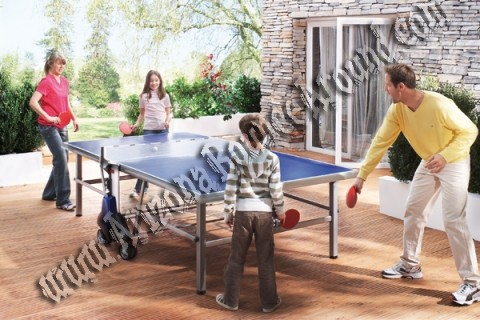
Rent a Professional Ping Pong Table in Phoenix
Ping Pong games are a great company party or company picnic idea fun for all ages and family gatherings. Ping pong or table tenns game rentals in Phoenix Scottsdale Tempe Chandler Arizona
Table Tennis - Ping Pong Table Rentals
Call today for a Quote! 480.874.3470
Starting At:
Call for special event pricing. Short or Long term rental rates available * Restrictions Apply
Rent a ping pong table today 480-874-3470
Our professional ping pong table measures 108" long, 60" wide, and 30" tall. It comes complete with 4 performance ping-pong paddles and 3 3-star ping-pong balls.
The rules state that the player who serves, receives, or chooses which end of the table to start from is decided by lot. The players may simple flip a coin to determine who chooses first or have one player hold the ball in the palm of his hand while both hands are under the table (or behind his back) and let the opponent choose the hand he believes holds the ball, if he chooses correctly he gets to choose first (either serve or receive first, or choose which end of the table to start at for the first game). If he does not choose correctly, the player holding the ball will have first choice. The other player will have the other choice.
Games are played to 11 points. Some players still play to 21 points; however, the rules adopted by the International Table Tennis Federation in September of 2001 set games at 11 points.
Matches are the best of any odd number of games.
Players will alternate serves every 2 points. If the score reaches 10-10, players will alternate one serve each until a player is ahead by 2 points.
Players switch ends of the table at the conclusion of each game. If the match goes to the last possible game, players will change ends when the first player reaches 5 points.
The player serving first shall receive first in the next game.
The Service:
The serve starts with the ball resting freely on the open palm of the server’s stationary free hand. The ball is to be held behind the server’s end line of the table and above the playing surface. The ball must not be hidden from the receiver by the server at any point during the serve.
Toss the ball straight up a minimum of 16cm (about 6.5 inches) and strike the ball as it is falling. The ball cannot touch anything before being struck. The ball is in play from the moment it is stationary on the palm of the free hand before the ball is tossed. If the server fails to make contact with the ball or misses the ball, it is a point for the opponent.
After the server strikes the ball, the ball must first contact his side of the table, bounce over the net without touching it or the net assembly, and land anywhere on the receiver’s court.
If the served ball touches the net and falls back on the server’s side, or off the table, the point is lost by the server. But if the served ball touches the net and falls onto the opponent’s side, then the serve is a “let,” and the serve is done over. No points are scored on a “let” serve. There is no limit to the number of “let” serves in a game.
The ball must bounce only one time on the receiver’s side before being hit back by the receiver.
The Return:
All returns must pass over or around the net assembly and land on the opponent’s court. A return touching the net or the net assembly is still in play. Returns striking anything other than the net or the opponent’s playing surface are out of play, resulting in a loss of the point to the player who hit the ball.
How a player may score a point:
If the ball passes over a player’s court without touching his side of the table after being struck by his opponent, a point is lost by the player who hit the ball.
If a player obstructs the ball by touching it while in play when the ball is above the table and traveling towards the playing surface, the point is lost.
If the ball contacts the edge of the playing surface, it is considered in play, but a ball striking the side of the table is out of play, resulting in a loss of point to the player who hit the ball.
A player cannot strike the ball twice in succession.
A player may strike the ball if he touches it in play with his racket held in his hand. A player may strike the ball with his racket hand while holding the racket, but a return striking both hands and the racket is considered striking the ball twice in succession, and the player will lose the point.
A player who touches the playing surface with their free hand during a point, or touches the net or moves the table during a point, loses the point.
Play may be interrupted to correct an error in the order of serving, or if the serve is delivered when the receiving player is not ready,y or if there is a disturbance during play (a stray ball bounces on your court). In these cases, a player may call a “let,” and the point will be played over.
Games are played to 11 points. Some players still play to 21 points; however, the rules adopted by the International Table Tennis Federation in September of 2001 set games at 11 points.
Matches are the best of any odd number of games.
Players will alternate serves every 2 points. If the score reaches 10-10, players will alternate one serve each until a player is ahead by 2 points.
Players switch ends of the table at the conclusion of each game. If the match goes to the last possible game, players will change ends when the first player reaches 5 points.
The player serving first shall receive first in the next game.
The Service:
The serve starts with the ball resting freely on the open palm of the server’s stationary free hand. The ball is to be held behind the server’s end line of the table and above the playing surface. The ball must not be hidden from the receiver by the server at any point during the serve.
Toss the ball straight up a minimum of 16cm (about 6.5 inches) and strike the ball as it is falling. The ball cannot touch anything before being struck. The ball is in play from the moment it is stationary on the palm of the free hand before the ball is tossed. If the server fails to make contact with the ball or misses the ball, it is a point for the opponent.
After the server strikes the ball, the ball must first contact his side of the table, bounce over the net without touching it or the net assembly, and land anywhere on the receiver’s court.
If the served ball touches the net and falls back on the server’s side, or off the table, the point is lost by the server. But if the served ball touches the net and falls onto the opponent’s side, then the serve is a “let,” and the serve is done over. No points are scored on a “let” serve. There is no limit to the number of “let” serves in a game.
The ball must bounce only one time on the receiver’s side before being hit back by the receiver.
The Return:
All returns must pass over or around the net assembly and land on the opponent’s court. A return touching the net or the net assembly is still in play. Returns striking anything other than the net or the opponent’s playing surface are out of play, resulting in a loss of the point to the player who hit the ball.
How a player may score a point:
If the ball passes over a player’s court without touching his side of the table after being struck by his opponent, a point is lost by the player who hit the ball.
If a player obstructs the ball by touching it while in play when the ball is above the table and traveling towards the playing surface, the point is lost.
If the ball contacts the edge of the playing surface, it is considered in play, but a ball striking the side of the table is out of play, resulting in a loss of point to the player who hit the ball.
A player cannot strike the ball twice in succession.
A player may strike the ball if he touches it in play with his racket held in his hand. A player may strike the ball with his racket hand while holding the racket, but a return striking both hands and the racket is considered striking the ball twice in succession, and the player will lose the point.
A player who touches the playing surface with their free hand during a point, or touches the net or moves the table during a point, loses the point.
Play may be interrupted to correct an error in the order of serving, or if the serve is delivered when the receiving player is not ready,y or if there is a disturbance during play (a stray ball bounces on your court). In these cases, a player may call a “let,” and the point will be played over.
Download Our Arcade Game flyer with all of our
Arcade Games, Dance DJ, & Mazes