
Ninja Warrior Fitness: Exciting Adventure Training
Ninja Warrior Fitness
and Adventure Guide
Ninja Warrior Fitness and Adventure blends strength, balance, agility, grip endurance, and problem-solving into one high-energy fitness adventure. Instead of repeating the same gym plan, you train your body to climb, swing, crawl, jump, and recover under pressure. Whether you are preparing for a local obstacle course, setting up a ninja warrior inflatable course for an event, or just chasing more fitness challenges, the right plan can make training safer, smarter, and more fun.
What makes ninja warrior training different from regular workouts?
Ninja warrior training is different because your whole body moves through random challenges, not separate drills. A standard workout may train your legs, back, or core on their own. Warrior fitness puts them together in motion: you grip, pull, land, brace, and make fast choices all at once. That mix creates adventure fitness that feels playful but still builds real athletic skill.
The biggest shift is mindset. Instead of asking how much you can lift, you start asking whether you can control your body through the obstacle. That question changes how you train. Strength still matters, but so do timing, coordination, confidence, and the ability to stay calm when a challenge looks scary.
For families, schools, parties, and community events, Ninja Warrior Fitness and Adventure can also open movement to people who do not enjoy standard exercise. A well-built obstacle course turns effort into a game. People may work on balance, climbing, jumping, and endurance without feeling trapped in a workout.

The foundation of warrior fitness
A strong ninja warrior routine starts with body control. Before you chase hard obstacles, focus on basic movement patterns that protect your joints and help you move well. The goal is not to muscle through every task. It is to move with enough control that your strength lasts longer.
Core stability is one of the most important foundations. When you hang from bars, jump to platforms, or crawl under barriers, your core keeps your hips and shoulders linked. Planks, hollow holds, dead bugs, mountain climbers, and slow hanging knee raises all support better obstacle work.
Grip strength is another key piece. Many fitness challenges end early because the hands give out before the rest of the body. Train grip little by little with dead hangs, farmer carries, towel holds, and clean bar work. Start with short sets and good form, then add time as your hands, forearms, and shoulders adapt.
Leg power matters too. Obstacles often need quick takeoffs, soft landings, and fast changes in direction. Squats, lunges, step-ups, broad jumps, and side hops can build the lower-body strength you need for sure movement.
Essential ninja skills to practice
Ninja skills are built through repetition, but each rep should have a goal. Rather than trying random obstacles every session, choose a few skills and practice them with focus on form, breathing, and recovery.
A balanced training plan should include:
- Hanging and swinging: Practice dead hangs, active hangs, and easy swings to build shoulder awareness and grip endurance.
- Climbing: Use ropes, cargo nets, walls, or safe climbing structures to improve pulling strength and foot placement.
- Jumping and landing: Train soft landings with bent knees, quiet feet, and a stable torso before increasing height or distance.
- Crawling and low movement: Bear crawls, army crawls, and crab walks build coordination while challenging the shoulders and core.
- Balance work: Use beams, lines, pads, or low platforms to improve focus, ankle strength, and controlled footwork.
- Transitions: Practice moving from one obstacle to the next without rushing, since many mistakes happen between challenges.
These skills connect directly to real obstacle course performance. A person who can hang, land, climb, and balance with control usually adapts better to new challenges than someone who only trains max strength.
How can beginners start safely?
Beginners should start with simple obstacles, short sessions, and clear steps instead of jumping into the hardest work right away. The first goal is to learn how your body moves, where you feel stable, and when fatigue starts to change your form. That approach builds confidence while lowering the chance of overuse or awkward landings.
Start with a warm-up that raises your heart rate and opens your joints. Five to ten minutes of light jogging, jumping jacks, arm circles, hip openers, and easy crawls can prepare the body for faster movement. After that, choose three to five beginner drills and practice them slowly.
A simple beginner session might look like this:
- Warm up: Light cardio, shoulder circles, hip mobility, and ankle movement.
- Skill practice: Balance walk, low crawl, short dead hang, and step-up jumps.
- Strength block: Squats, push-ups, rows, planks, and farmer carries.
- Mini course: Combine three easy movements into a short sequence.
- Cool down: Stretch forearms, calves, hips, shoulders, and back.
Keep the first few sessions easy to manage. If you finish wanting a little more, that is usually better than doing too much and feeling sore for days. Consistency is what turns early practice into long-term progress.
Training for a ninja warrior inflatable course
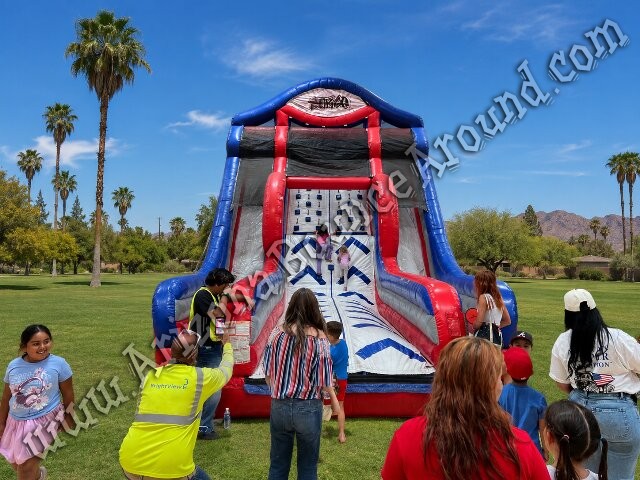
A ninja warrior inflatable course adds a fun, easy-to-join twist to obstacle training. Because inflatable parts bounce, shift, and absorb impact differently than fixed gym gear, they challenge balance and coordination in a new way. They are great for parties, youth programs, school events, and group fitness activities that value energy and participation.
When training for an inflatable setup, focus on agility and body awareness. The surface may feel less steady, so quick feet and controlled posture matter. Short shuttle runs, side steps, bear crawls, balance pauses, and low jumps can help people prepare for the movement demands.
Safety and pacing still matter. People should avoid wild dives, crowded lanes, and pushing through obstacles when tired. If a provider such as Arizona Bounce Around is part of your event plan, ask about setup needs, participant rules, and how best to match the inflatable course to your group's age and skill level.

Building strength without losing mobility
One common mistake in ninja warrior training is focusing only on pulling strength.
Pull-ups, rows, and hangs are useful, but obstacle success also depends on mobility.
Tight hips can make crawls and landings awkward. Stiff shoulders can make hanging feel rough. Limited ankle mobility can hurt balance and jumping form.
A well-rounded warrior fitness plan should pair strength work with movement quality. After strength exercises, add mobility drills that match the muscles you used. For example, after grip and pulling work, stretch the forearms, lats, chest, and shoulders. After jumping or lower-body work, open the calves, hamstrings, quads, and hip flexors.
Try to include these habits each week:
- Train pushing and pulling to keep your shoulders balanced.
- Practice single-leg movements to improve stability.
- Add rotational core work for twisting and turning obstacles.
- Stretch after sessions, not only when you feel tight.
- Take rest days seriously, especially after grip-heavy training.
Mobility does not mean long stretching routines every day. It means keeping your joints ready for the positions your sport needs.
Turning fitness challenges into motivation
Fitness challenges work best when they are specific, measurable, and fun. Instead of saying I want to get better at ninja training, choose a clear target. You might aim to hang for 20 seconds, complete five clean wall climbs, finish a short obstacle sequence without stopping, or improve your balance time on a beam.
Challenges also help groups stay engaged. At a fitness adventure event, people can move through stations and collect points for effort, creativity, or teamwork. This format makes the activity less intimidating because success isn't only about being the fastest or strongest.
Here are a few challenge ideas:
- Grip ladder: Increase hang time by small weekly steps.
- Balance streak: Count how many clean beam crossings you can complete.
- Crawl course: Move through cones or markers without letting your knees touch.
- Jump control: Practice landing quietly in a marked square.
- Team relay: Combine running, crawling, climbing, and carrying in a shared course.
The best challenges support progress without turning every session into a contest. For kids and beginners especially, confidence is part of the result.
What should a weekly ninja warrior training plan include?
A weekly ninja warrior training plan should include skill practice, strength work, conditioning, mobility, and recovery. You don't have to train daily to improve; variety is key to avoid straining your body. A balanced plan helps you arrive fresh enough to practice good technique.
A practical weekly rhythm might include two or three focused sessions. One day can emphasize grip, pulling, and hanging. Another can focus on jumping, balance, and lower-body power. A third can combine skills into a short obstacle course or conditioning circuit.
For example:
- Day 1: Upper body and grip with rows, hangs, carries, planks, and easy swings.
- Day 2: Legs and balance with squats, lunges, jumps, beam walks, and mobility.
- Day 3: Course practice with low-intensity obstacle combinations and light conditioning.
- Optional active recovery: Walking, stretching, easy cycling, or playful movement.
If your hands feel torn up, your shoulders feel sore, or your landings get sloppy, cut back. Better training is not always harder training. Often, it is smarter training.
Bringing adventure fitness into everyday life
You do not need a full gym to bring adventure fitness into your routine. Parks, playground gear, open fields, mats, and simple home tools can support creative movement. The key is to think in patterns: hang, crawl, carry, balance, jump, climb, and recover.
Everyday training can be simple.
Carry groceries with strong posture.
Take stairs with control.
Practice balance while standing on one foot.
Add short movement breaks during the day.
These small habits support the same body awareness you need on a bigger obstacle course.
For events, an inflatable or portable course can make the experience more social. People who might not sign up for a formal race may still enjoy a playful obstacle setup with friends, coworkers, or family. That is the power of combining fitness with adventure: movement becomes memorable.
Final takeaway
Mastering ninja warrior training techniques is not about becoming fearless overnight. Build strength, skill, coordination, and confidence one challenge at a time. Start with the basics, respect your recovery, and choose obstacles that match your current ability while still giving you room to grow.
Whether your goal is better warrior fitness, a more exciting workout routine, or a memorable ninja warrior inflatable course experience, the path is the same: move well, practice often, and keep the adventure in your fitness journey.