
Creative Carnival Game Booth Ideas for Adults
Creative Carnival Game
Booth Concepts
Creative carnival game booth ideas turn a party space into a place guests can explore, play, and enjoy together. The strongest concepts combine an easy-to-understand challenge, a distinctive visual theme, and a reason to try again. Whether you’re planning a backyard carnival party, a school celebration, or an adults-only gathering, build around games that suit your guests, space, and season.
What makes a carnival game booth worth playing?
A worthwhile carnival booth makes its challenge clear before guests reach the counter. Players should understand the goal, know where to stand, and recognize what counts as a successful turn. An appealing theme draws attention, but straightforward rules and a welcoming host make the experience work.
Before decorating, decide how each booth will operate:
- The action: Give players one main task, such as tossing, rolling, matching, or aiming.
- The turn: Set a consistent number of attempts so everyone receives the same opportunity.
- The result: Display the scoring system rather than leaving players to guess.
- The adjustment: Offer a closer throwing line or an easier target when appropriate.
Test each setup before the event. If explaining it takes longer than playing it, simplify the rules.
Four booth concepts with room for personality
Start with a few different types of play rather than several versions of the same tossing game. A mix of aiming, rolling, puzzle-solving, and cooperative challenges gives guests more ways to participate. These concepts can serve as starting points for either classic fairground styling or a more unusual theme.
The midway mission toss
Give a beanbag toss a story: players are delivering supplies to a traveling circus. Decorate sturdy target openings as a costume trunk, a ticket window, and a clown’s oversized suitcase. Assign different point values to each target and give every player three beanbags.
For a cooperative version, have a small group work toward a shared total. Keep the target values visible, and use lightweight decorations that stay outside the throwing path.
The rainbow roll alley
Create a tabletop rolling game with a contained lane and clearly marked scoring zones at the far end. Players roll a soft ball toward the zones, trying to stop it on their chosen color. A raised edge helps keep the ball within the game area.
Change the challenge without rebuilding the booth: ask players to reach a target score, land on three different colors, or match a color drawn from a card. Leave enough room for seated participation.
The mystery ticket match
Build a memory game using pairs of illustrated tickets attached to a display board. Each player reveals two covered images at a time and looks for matching popcorn tubs, circus tents, stars, or juggling clubs. Use removable covers that the host can reset between turns.
For older guests, add pairs that match by meaning rather than appearance, such as a performer and their prop. This gives your lineup a quieter option alongside more energetic circus party games.
The team tower challenge
At this booth, players collaborate to build a freestanding tower from large lightweight cups. Give each team the same materials and a clearly announced building period. The tower must stand without anyone touching it when the host checks the result.
Offer recognition beyond height: celebrate an inventive shape or strong teamwork. Keep building materials on a large table, with a separate waiting area so spectators don't crowd the players.
How can you make carnival games engaging for adults?
Carnival ideas for adults work best when familiar games gain a social or strategic twist. Keep the basic action simple, then add team scoring, optional challenges, or a playful theme. Adults do not need complicated rules to enjoy competing; they need a reason to care about the next turn.
Try these carnival party ideas for adults:
- Team passports: Give each group a card to complete across several booths. Include a mix of participation stamps and score-based achievements.
- Choose-your-challenge rounds: Let players select a closer target for fewer points or a farther target for more.
- Mystery objectives: Reveal a bonus task before a turn, such as landing on two different target colors.
- Creative awards: Recognize the best team name or most imaginative tower alongside the highest score.
Keep individual participation available, too. Not everyone wants to join a tournament, and a relaxed drop-in booth lets guests play without committing to a full competition.
Winter and Christmas themes that change the play
When choosing games for winter carnival events, start with the conditions players will actually experience. An indoor celebration needs contained play areas; an outdoor gathering may require rules and materials that guests can manage while wearing gloves. Avoid small, fiddly pieces when the setting makes them inconvenient.
A snowball delivery booth can use soft white beanbags tossed into decorated gift-box targets. A mitten match station can challenge players to pair oversized fabric shapes by color or pattern. For a quieter option, invite teams to rebuild a winter picture from large puzzle pieces.
Christmas carnival games can follow the same approach without needing elaborate equipment. Turn a rolling lane into a present-delivery route, or replace memory-game images with stockings, bells, and wrapped gifts. If your audience celebrates different traditions, use a broader winter theme or provide several decoration choices.
Water games with a clear splash zone
Water carnival games deserve their own area, not squeezed between dry booths. Plan where water will land, how staff will monitor the surface, and where guests can leave belongings before participating. Keep electrical equipment and items that must stay dry away from the activity.
For a simple concept, let players use hand-operated water squirters to move floating targets toward a marked finish line inside a shallow container. Another option is a sponge-transfer relay: teams move water between containers using sponges, with the play area clearly contained.
Offer a nearby dry alternative with a similar goal, such as moving lightweight objects with handheld fans. Guests can then choose their preferred version without missing out on the challenge.
Carnival design ideas that help guests navigate
Good carnival design ideas do more than make an attractive photograph. They help guests spot activities, understand the layout, and tell the difference between a waiting line and a playing area. Choose a small color palette, repeat a readable sign style, and give each booth a recognizable name.
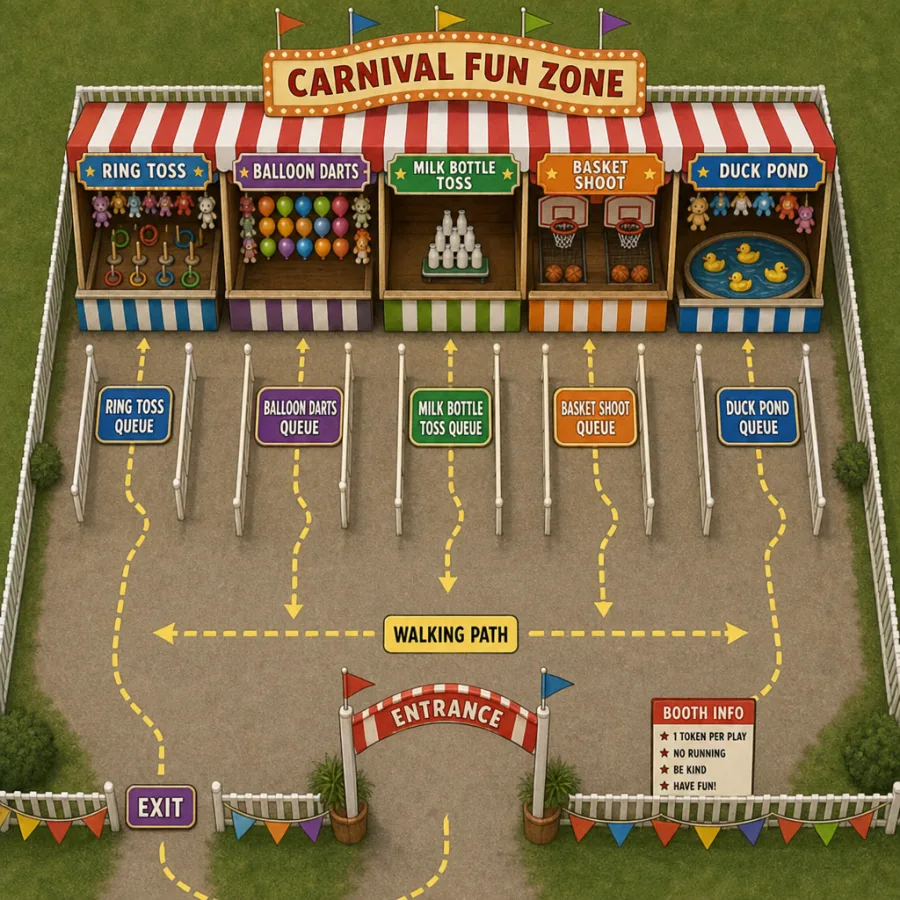
Place the game name high enough to see from the approach, then position rules where waiting guests can read them. Keep decorative trim away from target openings and moving parts. A beautiful booth becomes frustrating if its decorations hide the challenge.
Use visual consistency without making every booth identical. Striped table coverings can unify the event, while a different symbol identifies each activity. Mark throwing lines clearly, leave room to turn and move between booths, and, where feasible, provide lower playing surfaces.
Build a practical booth kit before buying decorations
Make your list of carnival party items, starting with the games. First identify what each activity needs to function, then add signs, styling, and prizes. This keeps decorative purchases from consuming the resources needed for sturdy targets, readable instructions, and smooth resets.
Use this preparation checklist:
- Write a booth card. Record the rules, number of attempts, scoring, reset procedure, and any easier variation.
- Pack by activity. Store each game’s pieces, signs, and spare supplies together in a labeled container.
- Rehearse a full turn. Have someone unfamiliar with the game read the sign and play without coaching.
- Check the reset. Make sure the host can retrieve pieces without crossing another active game.
- Plan recognition. Decide whether players receive participation stamps, points, prizes, or a combination.
- Prepare a backup. Identify which games can move indoors or operate without water if conditions change.
Keep prizes simple and transparent. Display what each result earns, and avoid promising rewards you cannot supply throughout the event. If you include food prizes, provide ingredient information and offer a non-food option.
Bring the booths together into one experience
Not all great carnival games need elaborate builds or expensive-looking props. A varied lineup, clear rules, a thoughtful layout, and friendly hosting let each concept shine. Start with the activities your guests are most likely to enjoy, then use a shared theme to connect them.
When you discuss your event with Arizona Bounce Around, bring your preferred concepts, available space, guest mix, and seasonal needs, and confirm which options are available. A focused plan makes it easier to decide what belongs at your celebration—and what you can leave out.