
Carnival Ride Rental Cost in Phoenix: What Drives 2027 Pricing
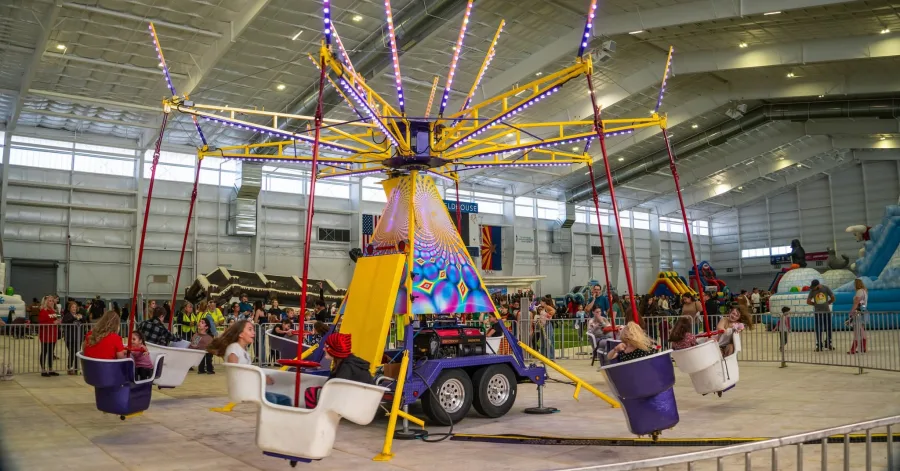
Carnival ride pricing in Phoenix does not follow a single rate card. A dunk tank and a full Ferris wheel sit at opposite ends of the market, and two companies can quote very different totals for what sounds like the same booking. The gap usually comes down to a handful of practical factors: what the ride is, who runs it, how far it travels, what it plugs into, and when you want it.
Arizona Bounce Around has rented carnival rides, inflatables, and event equipment across the Valley since 2002, and the pattern has stayed consistent. Hosts who understand the cost drivers get cleaner quotes and fewer invoice surprises. Here is what actually moves the number for 2026 events.
Why Quotes for the Same Ride Rarely Match
Ride rental is a logistics business dressed up as entertainment. The price you see covers a machine, a truck, a crew, insurance, maintenance, and the hours that crew spends on your site. Two companies with identical equipment can land on different totals because they handle those pieces differently. One may fold delivery, setup, and teardown into the listed rate within the Phoenix Metropolitan Area, while another quotes the ride alone and adds transport as a line item.
That is why comparing headline prices rarely tells the full story. Ask what the number includes before you decide anything is cheaper.
The Main Factors That Drive Carnival Ride Rental Cost in Phoenix
Most variation in a quote comes down to six things. The equipment fixes some; you can influence others with how and when you book.
Ride type and mechanical complexity
A carousel, a swing ride, a Ferris wheel, a trackless train, a mechanical bull, a fun slide, and a bungee trampoline all fall under the carnival umbrella, but they are not built or maintained the same way. Large rotating rides involve more steel, more inspection time, and more transport weight. Smaller attractions and carnival games sit at the low end because they load fast and require less on-site equipment.
Operator and attendant staffing
Some rides include attendants, while others are quoted as equipment only. Attendants are a labor cost, and they scale with ride size and how many hours your event runs. A ride that needs a trained operator for six hours costs more than one a host can hand to a volunteer. When you request quotes, ask directly whether the rate includes an operator.
Delivery distance and site access
One Phoenix vendor states that standard pricing includes delivery, setup, and teardown within the Phoenix Metropolitan Area, and that extra fees may apply based on how far outside that zone the event sits. Distance is only half of it. A backyard with a wide gate and a flat driveway loads quickly. A site behind a fence, up a slope, or deep inside a venue with a narrow service entrance eats crew time and can change the total.
Power supply and site preparation
Rides need power. If your venue has accessible circuits near the setup area, you save money. If the site is a field, a parking lot, or a stretch of park with no nearby outlet, a generator becomes part of the booking. Surface matters too. Level ground is straightforward. Slopes, soft turf, gravel, and uneven pavement can require extra prep or a different placement altogether.
Date, duration, and season
Weekend dates in peak event season carry more demand than a Tuesday in a quiet month. Multi-day bookings spread delivery and setup costs across more hours, which can make the daily rate look different from a one-day rental. School carnivals, fundraisers, and community festivals all cluster, so booking early gives you more room to negotiate on date and package.
Permits, insurance, and event scale
Large public events bring requirements that a backyard birthday does not. Schools, churches, corporations, and festivals often need vendor coordination, site documentation, and insurance paperwork before a ride rolls onto the property. Those requirements add administrative time, and they are part of why a stadium-scale quote looks nothing like a neighborhood party quote.
What Carnival Rides Actually List For
Published listing prices give a useful reference point, even though they vary by vendor, market, and year. The figures below come from rental listings and industry cost reporting. Treat them as a rough map of how the categories stack up, not as a Phoenix quote.
|
Ride or attraction |
Listed price example |
Context |
|---|---|---|
|
Mechanical and carnival ride category entry |
from $1,299 |
Vendor category listing |
|
Berry Go Round |
$2,500 |
Carnival ride rental listing |
|
Ferris Wheel |
$2,995 |
Carnival ride rental listing |
|
Additional rides on the same listing |
$2,995 to $3,995 |
Carnival ride rental listing |
|
Ballistic Swing Ride |
$4,500 |
Carnival ride rental listing |
|
42-foot Ferris Wheel |
$15,000 per day |
Industry cost article |
|
Carnival game such as Can Smash or Cactus Toss |
$75 |
Phoenix carnival game rental listing |
The spread is wide on purpose. A single carnival game can cost less than a fraction of a large mechanical ride, and the equipment tier matters more than the theme. Riders also notice that the big-ticket items cluster at the top of the range while games and smaller attractions sit far below. Mixing a few games with one signature ride is often the most cost-effective way to make an event feel like a carnival.
Add-Ons That Quietly Change the Total
Rides rarely travel alone. Once you add the pieces that make an event run, the invoice grows in ways that are easy to miss during planning.
-
Carnival games and booth attendants, priced per game and adding up quickly across a large field.
-
Concession equipment such as popcorn machines and concession stands.
-
Tents, tables, chairs, and staging for seating, shade, and a central gathering point.
-
Generators and light towers when the site lacks power or the event runs into the evening.
-
Portable restrooms, temporary fencing, and ticket booths for public-facing events.
-
DJ and AV services, entertainers, and food trucks for a fuller program.
None of these are required. The point is to price the event you actually want before you commit to a ride, not after.
How to Get a Quote You Can Compare
A vague quote is almost always a quote you cannot use. Give the rental company enough detail, and the numbers become comparable across vendors.
-
State the event date, start time, and end time, including setup access windows.
-
Give the full address and describe the setup surface, gate width, and any stairs or slopes.
-
List the rides and games you want, plus a backup option if a first choice is booked.
-
Ask whether the rate includes delivery, setup, teardown, and attendants.
-
Confirm what power is available on site and whether you need a generator.
-
Ask about insurance requirements and any paperwork the venue needs in advance.
-
Request the total in writing, including fees for distance outside the standard service area.
That last item matters in a metro area as spread out as Phoenix. A site that feels close on a map can still fall outside a vendor's standard zone.
Building a Budget That Survives Contact With Reality
Start with your total budget, then allocate roughly for one headline ride, a set of games, and the infrastructure that keeps guests comfortable. Shade, seating, water, and restrooms aren't glamorous line items, but they're why people stay and keep spending tickets. A slightly smaller ride paired with solid support pieces usually produces a better event than a single impressive machine on a bare lot.
Book early for peak season, confirm every inclusion in writing, and verify current pricing directly with the rental company, since listed rates change and travel fees depend on your address. With the drivers clear, the 2026 number stops feeling random and starts looking like something you can plan around.
Frequently Asked Questions
Does carnival ride rental in Phoenix include delivery and setup?
It depends on the vendor. At least one Phoenix rental company states that standard pricing includes delivery, setup, and teardown within the Phoenix Metropolitan Area, with extra fees possible for events farther out. Always confirm what the quoted rate covers, because a lower headline price may exclude transport or labor.
Are ride attendants included in the price?
Sometimes, and the details matter. Some rental companies supply attendants for certain carnival rides, as noted in the listing, while other bookings are equipment only. Attendant labor is a real cost, so ask specifically whether an operator is included and how many hours the rate covers before you compare two quotes.
Why do Ferris wheels cost more than carnival games?
Size, weight, inspection time, transport equipment, and staffing all scale with the ride. Published listings show carnival games at $75, while large mechanical rides run into the thousands, and a 42-foot Ferris wheel has been cited at $15,000 per day. The machine itself is only part of that figure.
What is the cheapest way to add carnival rides to an event?
Combine one mid-range attraction with several carnival games rather than booking multiple large rides. Games cost less per unit, load quickly, and keep guests moving. Pair that with shade, seating, and concessions, and the event reads as a full carnival without the cost of several mechanical rides.
Do I need a generator for a carnival ride rental?
Only if your site lacks accessible power near the setup area, parks, fields, and parking lots often need a generator, while venues with nearby outlets may not. Tell the rental company exactly what power is available and where it sits relative to the ride, and they can confirm what the setup requires.