
Bounce House Rental Phoenix: Sizes, Space and 2027 Pricing
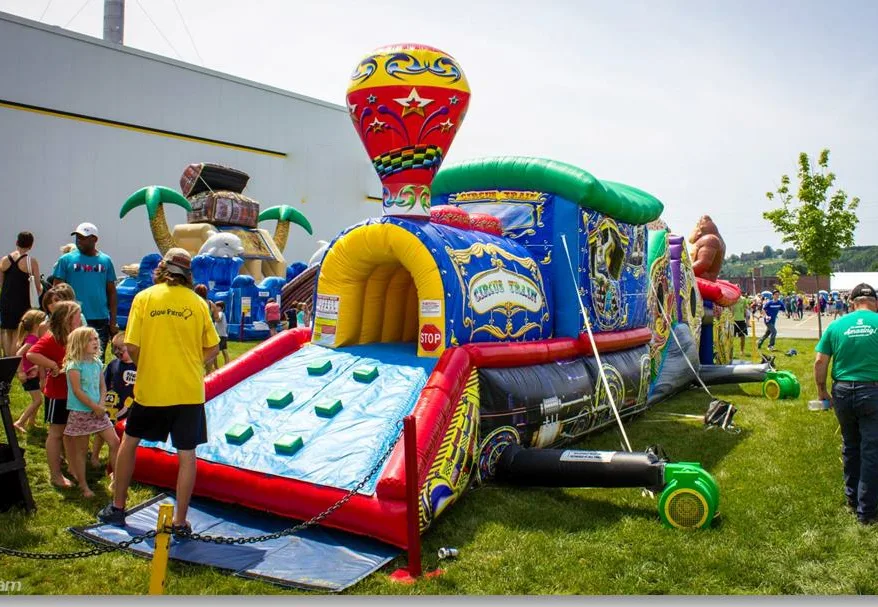
Phoenix backyards are deceptive. A strip of grass behind a block wall can look enormous from the patio and then feel tight once a 12-foot inflatable, its blower, and a line of eight-year-olds in socks show up. The two decisions that shape everything else are the size of the unit and the amount of flat, reachable space you can actually hand over to it.
This guide covers the size ranges Phoenix renters see, how to measure a setup spot honestly, what published pricing looks like heading into 2026, and the Phoenix-specific details that trip up hosts in July and August.
Bounce House Sizes You Will See in Phoenix
Inflatable sizing is not standardized across companies, so the number on a website matters more than the label. For reference, one Phoenix-area rental company lists its medium bounce house at 11 feet by 11 feet. That is a useful anchor for picturing a standard backyard unit, roughly the footprint of a small bedroom, before you add the entry ramp and blower.
From there, the market spreads out in a few recognizable directions:
-
Standard bounce houses. One enclosed jumping area with netted walls. The smallest practical option for a backyard birthday and the easiest to fit around landscaping.
-
Combo units. A jumping area plus a slide, basketball hoop, or climbing wall. These appeal to mixed-age crowds but take up more length than a bounce area alone
-
Obstacle courses and larger inflatables. Built for school carnivals, church events, and block parties where kids rotate through in waves rather than all at once.
-
Water slides and wet combos. Popular through Phoenix's long hot season, and they carry extra space needs at the runout end.
Whatever category you pick, ask for the exact footprint in feet before you pay a deposit. A useful question is not "how big is it" but "how much flat ground does it need, including the ramp and the blower." Companies that answer that precisely usually set up cleanly.
How Much Space a Bounce House Really Needs
The footprint number is only part of the math. Setup space has to be flat, clear, and reachable, and each of those words does real work in a Phoenix yard.
Measure the flat, usable footprint
Walk the yard with a tape measure rather than eyeballing it. Mark the corners with stakes or cones, then see what is left for seating, food, and walking paths. Leave room for guests to queue up at the entrance without standing in the jumping area, and keep the setup off any slope. Placing a unit on uneven ground stresses its seams and can cause it to shift under the weight of jumpers.
Check the path from the truck to the yard
This is the detail most hosts forget. A unit has to travel from the street to the setup spot, and an 11-foot-wide inflatable doesn't fold down to shoulder width when inflated, but the packaged unit is still bulky and heavy. Measure your side gate, note any steps, and flag gravel, decorative rock, or a narrow walkway along the side of the house. If the only route is through the garage or over a pool deck, say so when you book.
Watch for walls, trees, and overhead lines
Mature trees, patio covers, ramadas, and power lines all limit where an inflatable can safely sit. Check for pool fences and block walls at the property line. Also tell the rental company about anything overhead near the intended spot so the crew can plan anchoring and clearance before arrival.
Confirm power and anchoring
Inflatable blowers run continuously, so the setup spot needs a reliable power source within cord reach, or a generator if the party is in a park or open lot. Anchoring is the other half of the conversation. Ask how the crew anchors on your specific surface, since grass, artificial turf, gravel, pavers, and concrete each call for a different approach. Do not assume the same method works everywhere.
Matching Size to the Crowd
Guest count and age mix drive the size decision more than the yard does. A giant obstacle course in a small yard is worse than a modest bounce house with clear space around it.
|
Guest profile |
What tends to work |
|---|---|
|
Toddlers and preschoolers |
A smaller enclosed bounce house placed in shade, with close adult supervision and a short rotation |
|
Mixed ages, roughly 5 to 12 |
A combo unit with a slide gives different ages something to do without crowding one jump area |
|
A single age group of 10 or more kids |
A larger bounce house or obstacle course so kids rotate rather than pile in |
|
School, church, or neighborhood event |
Multiple units or an obstacle course, plus a plan for line management and staffing |
What Bounce House Rental in Phoenix Costs in 2026
Published Phoenix-area pricing gives a realistic range to plan around, even though every company quotes its own numbers. Publicly listed full-day bounce house rentals in the Phoenix area commonly fall between about $100 and $250. Larger or premium units are advertised at roughly $250 to $400 for a full-day rental.
|
What you are pricing |
Reported Phoenix-area range |
Context |
|---|---|---|
|
Standard full-day bounce house |
About $100 to $250 |
Commonly listed range for a full day in the Phoenix area |
|
Larger or premium inflatable |
About $250 to $400 |
Full-day listing from a Phoenix-area rental company |
Treat both figures as a planning benchmark rather than a firm 2026 quote. Rates move with the season, fuel and delivery costs, and how far the crew has to drive, so confirm current pricing directly with the rental company before you build a party budget around a number you saw online.
What pushes a quote up or down
-
Unit type and size, with water slides and obstacle courses typically sitting above a basic bounce house
-
Delivery distance and travel time across the Valley
-
Setup surface and access, since a long carry or a difficult gate takes crew time
-
Day of the week and season, with peak spring and fall weekend dates filling first
-
Add-ons such as tables, chairs, tents, concessions, and generators
-
Whether the rental is a half day or a full day
Phoenix Conditions That Change the Plan
Heat is obvious, but it is not the only local factor worth planning around.
Schedule jumps for the morning or late afternoon, and place the unit in the shade during the party window, even if that means a shorter carry from the street. Provide water and shaded seating for supervising adults, and plan shorter jump sessions with breaks instead of one long free-for-all. In flat afternoon sun, an unshaded inflatable gets uncomfortably hot on bare feet and legs.
Wind and dust deserve attention too. Summer storm season can bring gusts that make an improperly anchored inflatable unsafe, and blowing dust coats the vinyl. Ask the company about its wind policy and follow its guidance on when to stop jumping. If the forecast looks rough, call early rather than waiting for the crew to arrive.
Surface matters as well. A lawn in Scottsdale, a gravel side yard in Chandler, and a turf patch in Mesa all set up differently. Describe your surface when you book and ask what anchoring method the crew uses on it.
Backyard, Park, or Venue
A private backyard usually needs nothing beyond a confirmed setup spot and a clear path. Public parks, school fields, and HOA common areas are different. Those spaces may require a reservation, a permit, proof of insurance, or specific setup zones, and the requirements vary by jurisdiction and by property manager. Confirm with the city, school district, or HOA directly, and ask the rental company what documentation they can provide for the event.
For larger events, a written plan helps. A layout sketch showing the inflatable, generators, restrooms, and entry flow keeps the setup crew, the venue, and the organizer working from the same map.
What to Confirm Before You Book
|
Question |
Why it matters |
|---|---|
|
Exact footprint, including ramp and blower |
Determines whether it fits and how much yard is left for guests |
|
Power requirement |
Confirms whether you need an outlet close by or a generator |
|
Anchoring method for your surface |
Grass, turf, gravel, and concrete are not anchored the same way |
|
Delivery window and pickup time |
Shapes how you schedule food, cake, and guests |
|
Weather and cancellation policy |
Protects your deposit if a storm rolls through |
|
What is included |
Some quotes include delivery, setup, and stakes, and some do not |
Book early for spring and fall weekends, especially for combo units and water slides, since those dates fill first. Get the quote in writing with the unit name, footprint, delivery window, and total cost clearly listed.
Frequently Asked Questions
How much does a bounce house rental in Phoenix cost?
Publicly listed Phoenix-area full-day bounce house rentals commonly run about $100 to $250. Larger or premium units are advertised at roughly $250 to $400 for a full day. These are reported ranges rather than fixed 2026 rates, so confirm current pricing, delivery fees, and what is included directly with the rental company.
How much space do I need for a bounce house?
One Phoenix-area company lists its medium bounce house as 11 feet by 11 feet, a reasonable starting point for a backyard unit. Add room for the entry ramp, the blower, and a guest queue. Measure the intended spot with a tape before booking and ask for the exact footprint, including accessories.
Can you set up a bounce house on gravel or artificial turf?
It depends on the surface and thecrew's anchoring method. Grass, artificial turf, gravel, pavers, and concrete each require a different approach, and some surfaces limit setup options. Tell the rental company exactly what is underfoot when you book so they can plan the correct anchoring before arrival.
Should the bounce house be in shade in Phoenix?
Shade makes a real difference during the hot months. Vinyl in direct afternoon sun can get uncomfortable on bare feet, so position the unit in the shade during your party window and schedule jumping for morning or late afternoon. Shade seating for supervising adults helps too.
How far in advance should I book?
Book earlier for spring and fall weekend dates, which fill first, and for combo units, water slides, and obstacle courses. Reach out as soon as your date and venue are settled, then confirm the footprint, power source, anchoring method, and delivery window in writing before the event.