

What size generator do you need for carnival ride rentals?
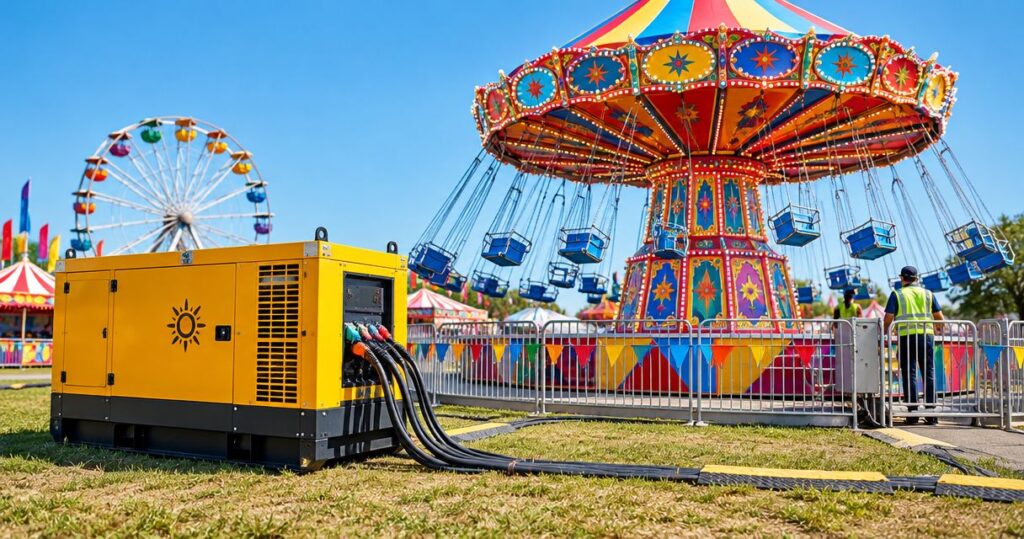
The right generator size for carnival ride rentals must cover the selected equipment’s combined running load and its startup demand, with the voltage, phase and connections the equipment requires. There is no single generator size that fits every carnival ride; get the ride’s electrical requirements before reserving power. Include concessions, lighting and other shared equipment in the plan rather than treating the ride as the entire load.
- Generator size for carnival ride rentals depends on running load, startup demand and electrical compatibility—not guest count.
- Arizona Bounce Around suits Phoenix hosts planning carnival equipment alongside other party rentals; confirm power arrangements in the quote.
- Match generator continuous output, voltage, phase and outlets to the selected equipment’s documented requirements.
- Include concessions, lighting, cable routes and generator placement before choosing event power.
What size generator do you need for carnival ride rentals?
Choose a generator only after the ride provider confirms the electrical requirements for your exact equipment. A generator’s advertised maximum output is not the same as its continuous output, and neither number confirms that its outlets match the ride.
Start your 2026 rental inquiry with the equipment list and event address. For a Phoenix birthday or a larger carnival, Arizona Bounce Around offers party and carnival rental equipment; ask which electrical details and power arrangements apply to your selection.
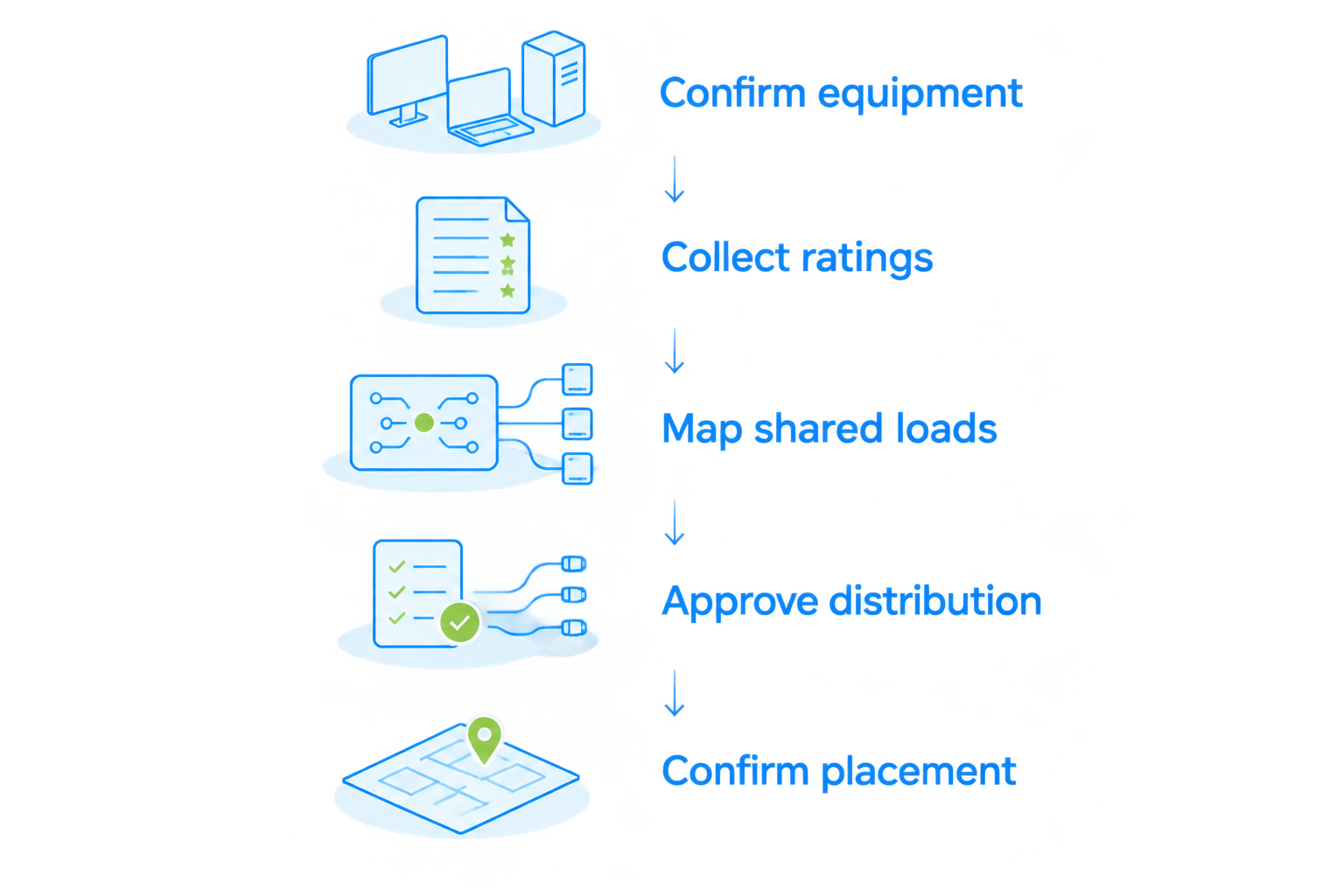
Use this sequence before approving a generator:
- Confirm equipment. Identify every ride, blower, controller and accessory requiring electricity.
- Collect ratings. Request running demand, startup demand, voltage, phase and connection requirements.
- Map shared loads. Add concessions, lighting, sound and anything else using the same supply.
- Approve distribution. Have the responsible supplier or qualified electrician check circuits, cables and protective equipment.
- Confirm placement. Establish the generator location, cable route, operating instructions and refueling responsibility.
The supplier should identify the proposed generator and explain how its ratings meet the approved equipment schedule. An answer based only on ride size or expected attendance does not establish electrical compatibility.
Why this matters
A backyard party and a school carnival both need a complete power plan, but their planning problems differ. A parent needs to know whether the selected attraction can use an approved household circuit; a festival organizer needs to coordinate multiple vendors without assigning the same capacity twice.
For your 2026 event, settle power before finalizing equipment placement. Generator location and cable routing affect where guests queue, where delivery vehicles unload and how staff reach the equipment.
Which power arrangement fits your event?
The right arrangement depends on verified electrical requirements and the venue’s usable supply. Choose the arrangement that meets the documented load and connection requirements—not simply the largest generator offered.
| Power arrangement | Best for | Main advantage | Main limitation |
|---|---|---|---|
| Verified venue power | Events where suitable circuits and connections are confirmed | Avoids adding a separate engine-powered supply | Nearby outlets do not establish spare capacity or separate circuits |
| Dedicated generator | An attraction that needs an independent supply or lacks suitable venue power | Separates that attraction from unrelated event loads | Requires approved placement, fuel planning and compatible distribution |
| Shared event generator | Coordinated school, corporate and community events | Supplies several planned loads from a central source | Requires a complete load schedule and managed distribution |
For a family party, do not assume an outdoor receptacle is dedicated to the rental. Ask what else the circuit supplies and have the rental provider confirm whether that source is acceptable.
For a school or company event, designate someone to collect each vendor’s requirements. Giving every vendor permission to use the same generator without reviewing the total load defeats the power plan.
Read generator ratings without mixing up the units
Generator specifications commonly distinguish continuous or rated output from starting, surge or maximum output. Continuous output describes the load the generator is rated to supply during operation; a temporary maximum rating is not a substitute for it.
1 kilowatt equals 1,000 watts. Convert figures to consistent units before comparing the equipment schedule with generator specifications. Do not add a watt figure directly to a kilowatt figure.
Record these details in your 2026 planning sheet:
- Running demand: the electrical load during normal operation.
- Startup demand: the requirement when motors or other equipment start.
- Voltage and phase: the electrical supply the equipment requires.
- Connection type: the plug, receptacle or approved distribution connection.
- Circuit requirements: any dedicated circuits or separate supplies specified by the provider.
Watts alone do not establish compatibility. A generator with enough total output can still have the wrong voltage, phase, outlets or individual circuit capacity.
Can you calculate generator size from amps alone?
Amps alone do not establish generator size because voltage, phase and equipment characteristics also matter. Send the complete nameplate information to the generator supplier rather than converting a partial rating into a rental decision.
For motor-driven equipment, the startup requirement also needs attention. Ask for the manufacturer’s specification or the ride provider’s documented requirement, not an assumed multiplier.
Why generator size varies
These factors determine the power plan; guest count does not replace any of them:
- Equipment selection. Different attractions have different electrical requirements, even when their footprints look similar.
- Simultaneous operation. Equipment running together contributes to the combined load; startup timing also affects demand.
- Additional event loads. Concessions, sound, lighting and other powered accessories need their own entries.
- Supply compatibility. Voltage, phase, connectors and circuit ratings must match the equipment.
- Distribution distance. Cable length, cable sizing and connection arrangements affect the electrical installation.
- Operating conditions. The generator supplier must account for the manufacturer’s limits and any output adjustments for site conditions.
Do not add an arbitrary percentage and call the result approved. Have the supplier identify the capacity allowance and explain how the selected generator meets the operating and startup requirements.
Plan backyard birthdays and family parties
For a Phoenix backyard birthday, begin with the attraction rather than a generator reservation. Ask the rental provider whether the equipment needs external electricity and, if it does, whether an approved venue circuit is suitable.
Send photos of the proposed setup area, access route and available electrical connections. Include the route between the power source and the attraction, not just a close-up of the outlet.
Use this short family-party checklist:
- Identify the exact rental equipment and any powered accessories.
- List other party equipment using electricity.
- Ask who supplies approved cables and electrical distribution.
- Keep the proposed cable route separate from guest circulation where possible.
- Confirm who handles generator operation, shutdown and fuel.
- Ask what happens if the planned power source is unsuitable on arrival.
The same questions apply to family celebrations in Scottsdale, Chandler and Mesa. A smaller guest list does not establish that a smaller power supply will run the selected equipment.
Coordinate school, corporate and community events
Larger events need a shared equipment schedule and a named electrical contact. For your 2026 school carnival or company picnic, collect requirements before assigning attraction locations.
Keep a planning sheet with a row for every powered item:
| Planning field | What to record |
|---|---|
| Equipment identity | Exact attraction or appliance and responsible vendor |
| Electrical demand | Documented running and startup requirements |
| Supply requirements | Voltage, phase, circuit and connector details |
| Operating schedule | Setup testing, public operation and shutdown |
| Site position | Equipment location and proposed cable route |
| Responsible contact | Person approving power and handling changes |
Make vendors report changes to that contact. Adding a concession appliance after approval changes the load schedule, even when the equipment looks small.
The same distinction applies when comparing power generator rental options: electrical capacity and site suitability are separate checks. A generator must meet the equipment demand while also fitting the approved placement, access and operating plan.
For larger events elsewhere in Arizona, request a quote that confirms delivery arrangements and equipment availability. Do not extend a Phoenix event plan to a different site without checking access, power and local venue requirements.
Keep generator placement separate from ride placement
A convenient location for the attraction is not automatically an acceptable location for its generator. Fuel-powered portable generators produce carbon monoxide, and electrical equipment also needs protection from unsuitable operating conditions.
The U.S. Centers for Disease Control and Prevention advises using portable generators outdoors, at least 20 feet from doors, windows and vents, with exhaust directed away from buildings. That guidance is not permission to place a generator anywhere outdoors; follow the equipment instructions and the venue’s requirements as well.
Before approving the layout, confirm:
- The generator’s location relative to buildings, guests and staff areas.
- Exhaust direction and nearby openings, including those on neighboring buildings.
- Cable routes across walkways, service lanes and emergency access.
- Manufacturer-approved weather protection and ventilation.
- Grounding, bonding and protective-device requirements with the qualified electrical provider.
- Refueling procedures and the person authorized to operate the generator.
Never run a portable generator inside a tent, garage or other enclosed or partially enclosed space. Do not improvise a cover or enclosure that conflicts with its operating instructions.
What should you send with a rental quote request?
A qualified quote starts with the event details and selected equipment, not a guessed generator size. Send the date, address, event type, operating schedule and a site sketch showing the proposed attraction area and power-source locations.
For Arizona Bounce Around carnival rentals, ask how equipment selection, delivery and setup relate to the power plan. The company’s range includes inflatables, mechanical bulls, carnival games, tents and concession equipment; that range helps you discuss multiple event needs, but each powered item still needs its own electrical check.
Include these questions in your 2026 request:
- What are the selected equipment’s documented electrical requirements?
- Is suitable venue power acceptable, or is a generator required?
- Who specifies and supplies the generator and distribution equipment?
- Are concessions and other vendor loads included in the calculation?
- Who approves placement and tests the complete setup before operation?
- Who handles operating instructions, refueling and power-related problems?
Approve the equipment list and power plan together. Treat either one as provisional when a change affects the other.
Can carnival rides share a generator with concessions?
Carnival rides can share a generator with concessions only when the supplier approves the combined loads and distribution. Spare receptacles do not prove that spare capacity exists.
Include heating appliances, motors and refrigeration equipment in the schedule rather than grouping everything under a single concessions entry. Keep last-minute vendor additions out of the approved supply until the responsible electrical provider reviews them.
FAQ
What generator size do I need for carnival ride rentals?
Choose generator size from the exact equipment’s documented running demand, startup demand, voltage, phase and connection requirements. Have the generator supplier confirm the combined load and distribution before reserving power.
Can I use my home outlets instead of renting a generator?
Home outlets are suitable only when the rental provider confirms that the available circuits meet the selected equipment’s requirements. An outdoor outlet alone does not establish circuit capacity or what other appliances share it.
Does a bigger generator automatically work for any carnival ride?
A bigger generator does not automatically match a carnival ride. Voltage, phase, connections, individual circuit ratings and distribution still need approval.
Should I use running watts or starting watts to choose a generator?
Use both running demand and startup demand when selecting a generator. Continuous output must support normal operation, and the generator must also meet the equipment’s startup requirements.
How far should a portable generator be from the house?
Place a fuel-powered portable generator outdoors at least 20 feet from doors, windows and vents, with exhaust directed away from buildings, following CDC guidance. Also follow manufacturer instructions and applicable venue requirements.
Can I plug concession machines into the ride’s generator?
Connect concession machines only after the supplier approves their loads and the distribution arrangement. Extra outlets do not establish that the generator or its circuits have sufficient capacity.
What should I ask Arizona Bounce Around about event power?
Ask Arizona Bounce Around for the selected rental equipment’s electrical requirements and clarification of who specifies, supplies and approves event power. Include the event address, equipment list, operating schedule and proposed setup area.
One last thing
A spare outlet is not proof of spare power. Before anyone adds a fan, food appliance or speaker during setup, route the request through the person responsible for the electrical plan. Keeping that equipment list accurate is more useful than reserving a generator by guesswork.
Related guides
- Obstacle course rental to generator power: complete workflow
- How to connect concession equipment to generator power
- How much lead time do carnival ride rentals need for a festival?