

Is it safe to run a bounce house during Phoenix summer heat?
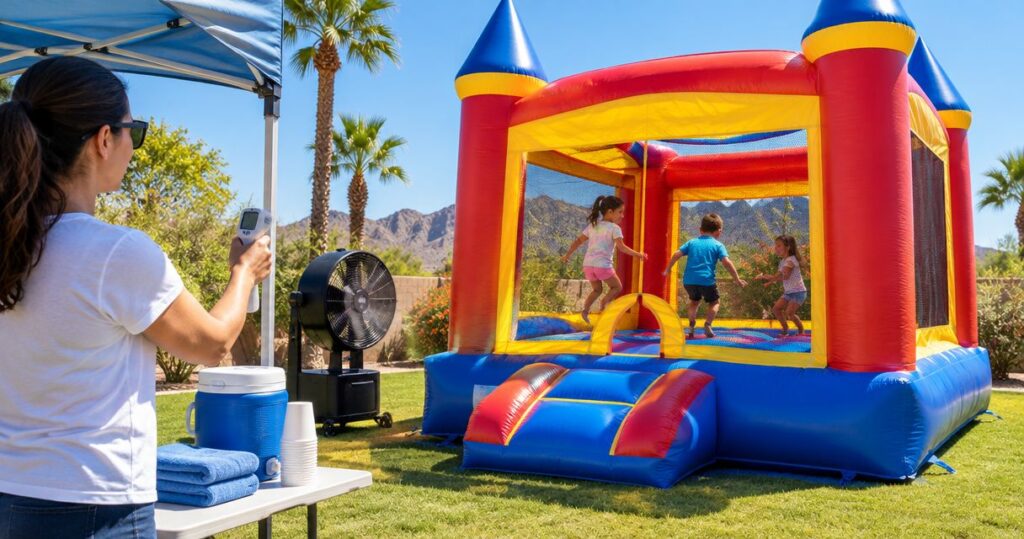
A bounce house is not automatically safe to operate during Phoenix summer heat: use depends on current weather, the equipment’s operating instructions, surface conditions and children’s ability to stay cool. Do not open or continue play when heat conditions are unsafe, surfaces are too hot, children show heat-illness symptoms, or weather exceeds the equipment’s limits. Shade, water and breaks support your plan; none makes extreme heat safe.
- Bounce house safety in Phoenix heat requires weather checks, equipment instructions, supervision and a cooling plan.
- National Weather Service guidance warns that direct sunshine can increase heat-index values by up to 15°F.
- Stop play for heat symptoms, unsafe surfaces, thunder or wind beyond equipment limits.
- Choose an indoor backup before the party, not after outdoor play becomes unsafe.
Why this matters
A backyard birthday needs the same clear stop-play decision as a school carnival. Children are active inside the inflatable, adults are busy hosting, and a shaded seating area does not tell you how conditions feel on the jumping surface.
For 2026 summer planning, arrange the cooling area and backup activity before choosing your rental window. Arizona Bounce Around offers bounce house rentals alongside water slides, carnival games, tents and concession equipment, so your equipment discussion can include alternatives rather than only a larger inflatable.
Is it safe to run a bounce house during Phoenix summer heat?
There is no single outdoor temperature that makes every bounce house safe for every child. Follow the specific unit’s instructions and rental-provider directions, then assess weather, surfaces, supervision and access to a genuinely cool recovery space.
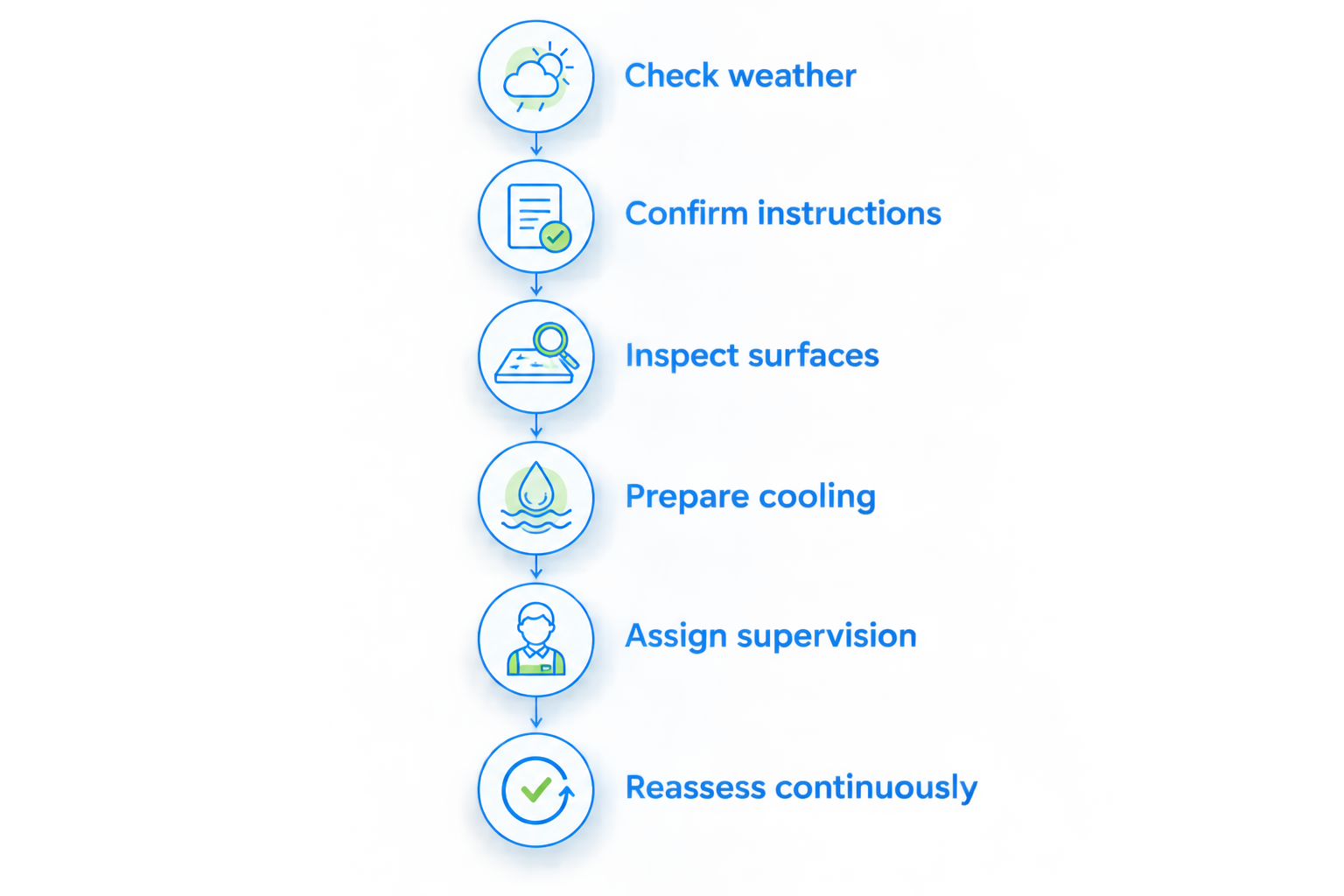
Use this sequence before opening the entrance and repeat the checks as conditions change:
- Check weather. Review the Phoenix-area forecast, heat alerts, wind and thunderstorm conditions. Check conditions at the actual venue, not only at home.
- Confirm instructions. Ask for the unit’s operating restrictions, weather shutdown procedure, rider limits and supervision requirements. Do not substitute advice about another inflatable.
- Inspect surfaces. Have the responsible adult check entry steps, the jumping surface and exposed contact points. Keep children out when surfaces are too hot for contact; a comfortable-feeling patch alone does not establish safety.
- Prepare cooling. Set up drinking water and a cool rest location before play starts. Identify an air-conditioned space where possible.
- Assign supervision. Name the adult responsible for watching riders and stopping admission. Make sure that adult can pause the activity without waiting for the host’s permission.
- Reassess continuously. Stop when conditions change or a child develops symptoms. A successful opening check is not permission to operate all afternoon.
Why summer bounce house safety varies
Your 2026 event plan needs to account for the actual site and equipment, not just the forecast high. These factors change the decision:
- Sun exposure: The entrance, slide and jumping area can receive different amounts of sun. Shade also moves during the party.
- Activity level: Jumping produces body heat. Watching children from a chair does not reflect the effort they are making.
- Surface conditions: Direct sun heats exposed materials. Air temperature alone does not describe contact conditions.
- Individual health: Age, illness, medications and other health factors affect heat tolerance. Parents should seek medical guidance for a child with specific concerns.
- Cooling access: A nearby air-conditioned room provides a different recovery environment from an outdoor chair under a canopy.
- Wind and storms: Heat is only part of the operating decision. Wind limits, anchoring instructions and lightning precautions still apply.
National Weather Service heat-index guidance explains that its values assume shade and light wind; full sunshine can increase heat-index values by up to 15°F. That figure is not a correction for vinyl surface temperature and is not a bounce house operating limit.
Choose the activity around your cooling plan
A water slide is not an automatic solution to unsafe heat. Compare the practical requirements before deciding what belongs at your Phoenix birthday, school celebration or company picnic.
| Activity | Best for | Planning advantage | Limitation |
|---|---|---|---|
| Dry bounce house | Events where weather, site and supervision support active outdoor play | Does not require a water-play setup | Active play and hot contact surfaces still need attention |
| Water slide | Events prepared for supervised water play | Adds a water-based activity | Does not remove heat-illness risk; water access, drainage and slip prevention need planning |
| Indoor carnival games | Events with a suitable indoor venue | Provides an alternative to outdoor jumping | Requires venue approval, floor space and equipment-specific checks |
Choose an activity you can stop without ending the celebration. A birthday with an indoor game ready to start is easier to manage than a party whose entire schedule depends on continuous outdoor jumping.
For a school or community event, place the alternative activity on the published schedule. Families should know that an outdoor attraction can close while the rest of the event continues.
Plan the site before delivery
Send photographs of the intended setup area and access route when requesting your rental. Include gates, overhead obstructions, the power location and the route children will take between the inflatable and the cooling area.
The Phoenix bounce house yard-preparation guide is a useful next step for organizing those details. Ask the rental provider to confirm the exact footprint, required clearances, surface suitability and anchoring method for the selected unit.
Do not add a canopy over an inflatable, relocate equipment or change its anchoring yourself. A shade structure needs its own approved placement and must not interfere with the inflatable, blower, overhead clearance or exit route.
Keep the drinking-water station accessible without sending children through the admission line. Separate waiting guests from the exit so a child who feels unwell can leave promptly with an adult.
Backyard birthdays and family parties
For a Phoenix or Scottsdale backyard party, identify the indoor cooling room before guests arrive. Tell parents where it is, and keep the route clear rather than using it for gifts, coolers or furniture.
Split hosting duties so the person serving food is not also the only inflatable supervisor. Give children an appealing non-jumping option, such as an indoor craft or seated game, so taking a break does not feel like missing the party.
School, corporate and community events
For Chandler school celebrations, Mesa community events and Phoenix company picnics, write down who monitors weather and who orders a shutdown. Brief volunteers before admission begins, including replacement volunteers arriving later.
Map cooling areas, drinking water, first-aid access and emergency-vehicle access. Make sure queues do not block those routes, and tell families where to reunite if an attraction closes unexpectedly.
Are mornings or evenings safer than midday?
Mornings or evenings can offer less heat exposure than the hottest part of the day, but the clock does not establish safe conditions. Check the forecast for the actual operating period and reassess the site before admitting riders.
For your 2026 invitation, distinguish the party start time from the outdoor activity window. You can schedule food, cake or indoor games separately rather than promising that jumping will remain open throughout the celebration.
An evening plan also needs suitable lighting, clear paths and an agreed closing procedure. Do not trade a heat problem for poor visibility around entrances, cords or anchoring points.
What should you do if a child looks overheated?
Stop the child’s activity immediately and move them to a cool place. Watch for headache, dizziness, nausea, weakness, unusual fatigue or heavy sweating; do not ask the child to finish a turn first.
CDC heat-illness guidance identifies confusion, loss of consciousness and other serious neurological changes as emergency warning signs. Call 911 for suspected heat stroke, begin cooling immediately and follow dispatcher instructions; sweating does not rule out heat stroke.
For a child who is alert and able to swallow, offer small sips of water while they cool. Do not give drinks to someone who is unconscious, confused or unable to swallow safely, and seek medical help when symptoms are severe, worsen or do not resolve.
If heat conditions contributed to the problem, pause the attraction and reassess all participants. Moving one child indoors does not establish that continued play is appropriate for everyone else.
What if wind or thunder arrives during the party?
Stop operation according to the equipment’s instructions and the provider’s shutdown procedure. Follow the specified sequence for removing riders and securing or deflating the unit; do not improvise while children remain inside.
National Weather Service lightning guidance calls for waiting at least 30 minutes after the last thunder before resuming outdoor activities. A tent or inflatable is not a lightning shelter; use a substantial enclosed building or a hard-topped enclosed vehicle.
The 30-minute lightning wait is not permission to reopen a bounce house. Wind, heat, ground conditions and the unit’s instructions still determine whether operation can resume.
Request a quote that addresses summer conditions
Arizona Bounce Around is a fit for Phoenix families and event planners seeking bounce house rentals alongside other party equipment. Ask about equipment selection and setup arrangements without treating a rental reservation as confirmation that the weather will permit operation.
For a useful 2026 quote request, provide:
- Event details: Date, address, backyard or venue setting, guest ages and expected participation.
- Activity window: When you want outdoor play to begin and end, separate from the overall party hours.
- Site information: Surface type, measurements, access photographs, overhead obstacles and available power.
- Heat plan: Sun exposure, drinking-water placement, cooling location and your alternative activity.
- Operating questions: Supervision responsibilities, equipment limits, shutdown instructions and restart requirements.
- Service questions: Delivery and setup arrangements, equipment cleaning procedures, and weather-related booking terms.
For larger events elsewhere in Arizona, request confirmation of service, delivery logistics and equipment availability by quote. Do not assume arrangements for a Phoenix backyard apply to a statewide community festival.
Arizona Bounce Around’s equipment selection gives you alternatives to discuss, but adding equipment also adds layout and supervision decisions. Confirm the written plan before inviting guests to a particular activity.
Plan your summer rental
Prepare your date, site details, guest ages and cooling plan before requesting a quote.
FAQ
Is there a safe temperature cutoff for a bounce house in Phoenix?
There is no universal temperature cutoff that establishes safe use for every inflatable and child. Follow the specific equipment instructions and assess heat alerts, surfaces, activity levels and cooling access.
Does putting a bounce house in the shade make it safe?
Shade alone does not make a bounce house safe in extreme heat. It reduces direct sun exposure, but active children still produce body heat and need supervision, drinking water and access to cooling.
Is a water slide safer than a dry bounce house in summer?
A water slide is not automatically safer in summer heat. It adds water-play considerations and does not eliminate heat illness, so compare the equipment requirements and your ability to supervise it.
How often should children take breaks from a bounce house?
Use frequent cooling breaks rather than treating a fixed timer as proof of safety. Adjust the activity to conditions and stop immediately if a child feels unwell; follow equipment and medical guidance relevant to the participants.
Can children use a bounce house during a heat warning?
Do not assume bounce house use is appropriate during a heat warning. Follow local public-health advice and equipment restrictions, and move the activity indoors or postpone when outdoor conditions are unsafe.
Can I spray water on a dry bounce house to cool it?
Do not spray water on a dry bounce house unless its instructions and the rental provider expressly permit that use. Improvised water use can change footing and introduce hazards around electrical equipment.
What should I tell parents before a summer bounce house party?
Tell parents the outdoor activity window, cooling location and weather backup plan. Ask them to share relevant health concerns privately and explain that play will stop if conditions become unsafe.
One last thing
Write the stop-play decision before you send invitations. Your 2026 plan should name the decision-maker, the backup activity and how guests will hear about a change.
The most useful backup is one you can start immediately. Put its supplies in place before guests arrive, not in a locked classroom or a storage bin you cannot find during the party.
Related guides
- How long does bounce house rental setup take?
- Can carnival games be rented for an indoor event?
- How far ahead should you book a Phoenix bounce house rental?