

Can carnival rides be set up on a paved parking lot?
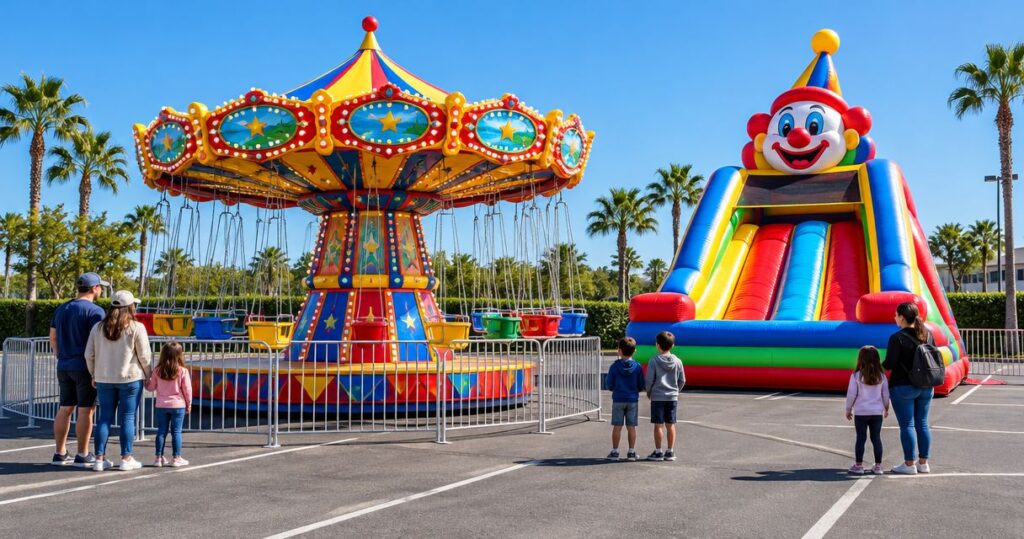
Yes—carnival rides can be set up on a paved parking lot when the selected equipment permits that surface and the rental provider approves the site. A carnival ride rental on pavement also needs suitable ground conditions, delivery access, power where required, and a layout that separates guests from vehicles; pavement alone does not make a location suitable.
- Carnival ride rental on pavement requires equipment-specific approval, not just an empty parking lot.
- Arizona Bounce Around serves Phoenix parents and event planners seeking party and carnival equipment rentals.
- Confirm delivery access, surface condition, securing requirements, power, and pedestrian routes before booking.
- Keep ride operating areas, waiting lines, and emergency access separate from vehicle traffic.
Can carnival rides be set up on a paved parking lot?
Yes, provided the particular ride and parking lot work together. Asphalt and concrete are not automatic disqualifiers, but neither surface replaces a review of the equipment’s installation instructions and the property’s restrictions.
For your 2026 event, start with the location rather than a favorite ride. Send Arizona Bounce Around the address, surface description, photographs, and event details so your carnival ride rental request includes the information needed for a site discussion.
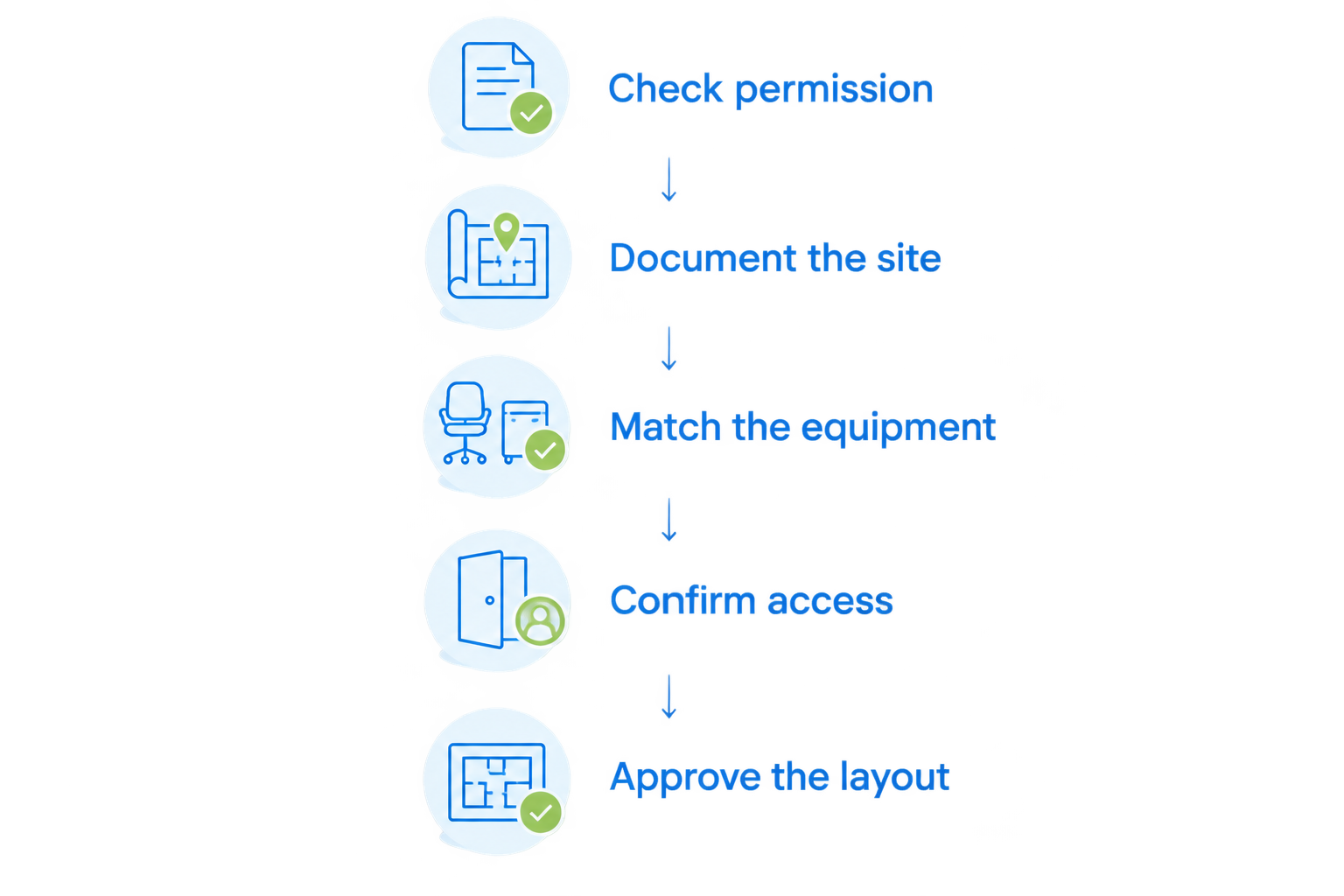
Use this sequence before committing to a layout:
- Check permission. Get the property owner’s approval to use the lot for the event, including delivery and removal.
- Document the site. Show slopes, drains, parking stops, overhead obstructions, entrances, and the proposed equipment area.
- Match the equipment. Ask which requested attractions accept the surface and what installation conditions apply.
- Confirm access. Review the delivery route, unloading position, guest paths, and emergency access with the venue and provider.
- Approve the layout. Confirm operating space, queues, power arrangements, and any required property or event approvals before booking.
A parent planning a driveway birthday and a school organizing a parking-lot carnival need the same basic answers. The larger event also needs coordination among the venue, rental provider, volunteers, and anyone managing traffic.
Why this matters
An empty parking space is not the same as usable event space. A ride needs its approved operating area, and your guests still need room to approach, wait, board, leave, and reach other activities.
For a Phoenix family party, the main constraint might be a narrow driveway entrance. For a school or corporate event, it might be keeping the event area separate from employees, deliveries, or parents arriving in cars.
Choose equipment for the usable site, not the size of the parking lot on a map. That distinction helps you request a qualified quote instead of selecting attractions that later need a different location.
Pavement versus grass: which surface should you choose?
Neither pavement nor grass is universally better for carnival equipment. Your decision depends on the specific attraction, the ground beneath it, access, and the installation method the provider approves.
| Surface | Best for | Planning advantage | Limitation to resolve |
|---|---|---|---|
| Paved parking lot | Events using an existing paved gathering area | Provides a defined area without placing equipment on lawn | Slopes, drains, traffic, surface restrictions, and equipment securing requirements still need review |
| Grass area | Events with an approved lawn location | Keeps attractions off parking spaces when the lawn is suitable | Ground condition, irrigation, underground services, and vehicle access need review |
On pavement, do not assume a setup method used on grass can simply be replaced with loose weights. Ask the provider to identify the installation method for the exact equipment and obtain the owner’s permission for anything that affects the surface.
On grass, do not assume that open ground permits staking. Underground utilities and irrigation still matter, and surface appearance does not establish ground suitability.
If you are comparing locations for games as well as rides, the guide to setting up carnival games on grass instead of pavement addresses that separate equipment category. Do not transfer a game’s setup requirements to a mechanical ride or inflatable.
Why parking-lot suitability varies
The following factors determine what your rental provider needs to review. Include them in your 2026 planning notes rather than leaving them for delivery day.
- Equipment requirements. Each attraction has its own installation instructions, operating area, clearance needs, and surface restrictions. Approval for one attraction does not approve every attraction.
- Surface condition. Show cracks, potholes, loose material, drainage channels, and changes in level. Describe recently repaired or resurfaced areas to the provider and property owner.
- Securing and surface protection. Confirm how the equipment will be installed and what protection, if any, the provider requires beneath contact points. Do not improvise materials or securing arrangements.
- Delivery access. Gates, tight turns, parked cars, bollards, and loading restrictions affect whether equipment can reach the proposed position.
- Power and utilities. Identify available electrical connections and their locations. The provider must confirm the supply required for the selected equipment and how cables will be managed.
- People and vehicle movement. Show queues, boarding areas, exits, accessible routes, and emergency access. A lot that remains open to vehicles needs a clear separation plan agreed with the venue.
What should you photograph and measure?
Send 3 photo views with your initial inquiry: the entire proposed setup area, the delivery entrance, and the route between them. Add close-ups of anything that interrupts the surface or limits clearance.
Measure the usable area rather than counting parking spaces. Include its length and width, the narrowest access opening, and the location of obstacles; ask the provider which additional measurements are needed for the selected equipment.
Your site notes should cover:
- Ground: asphalt or concrete, visible slope, drains, raised curbs, parking stops, and damaged areas.
- Overhead space: trees, building overhangs, light fixtures, signs, and overhead lines.
- Access: gate openings, turns, unloading position, and restrictions on delivery vehicles.
- Utilities: outlet locations and any power arrangements proposed by the venue.
- Neighboring uses: building entrances, active parking, loading areas, and adjacent businesses.
Photographs help explain a location, but they do not replace approval. Ask whether the provider needs a site visit or further documentation before confirming the requested setup.
How should you arrange rides, lines, and traffic?
Start your layout with movement, not decoration. Mark 2 separate routes on your draft: one for delivery vehicles and one for guests, then ask the venue and provider how those routes will remain separated during setup and removal.
Place waiting lines outside the equipment’s required operating area. Keep boarding and exit points clear so guests leaving an attraction do not have to push back through the queue.
For a backyard birthday, check whether arriving family cars would block the driveway needed for unloading. Decide where guests will park before using the driveway as the equipment area.
For a school, corporate, or community event, identify who closes the event area to vehicles and when that closure begins. Do not schedule guest arrival while equipment delivery still depends on driving through the gathering area.
A useful layout also identifies:
- Building entrances and routes that must remain clear.
- Waiting areas that do not block neighboring attractions.
- Power connections and proposed cable routes for provider review.
- Restrooms, seating, concessions, and waste stations outside required clearances.
- The person authorized to resolve a site issue during delivery.
Keep the delivery path usable until removal is complete. An entrance that works before the party can become blocked by parked cars, tables, or guests later.
Planning a Phoenix birthday or family party
For a Phoenix birthday in 2026, confirm whether the proposed pavement belongs to your household, a venue, an apartment community, or a shared property. Permission from a resident does not replace approval from the person responsible for the event area.
Tell the provider the guests’ age groups and the activities you want. Ask which equipment fits both the participants and the approved space rather than assuming a ride that works at a festival will suit a residential driveway.
Families planning in Scottsdale, Chandler, or Mesa should provide the same site details. Include gates, shared driveways, community restrictions, and the location where delivery can unload without blocking neighbors.
Arizona Bounce Around is best for Phoenix parents and event planners seeking party and carnival equipment rentals. For a paved-site inquiry, ask which requested equipment suits the location and what delivery, setup, and operating arrangements the quote covers.
Planning a school, corporate, or community event
For a school carnival or company family event in 2026, assign 1 site contact to coordinate the property manager, rental provider, and event team. That person should hold the current layout and have authority to resolve access questions.
A larger parking-lot event needs a more detailed briefing than a backyard party. Include:
- Event date, public opening time, and closing time.
- Delivery and removal windows allowed by the property.
- Expected attendance and participant age groups.
- Proposed attractions and their locations.
- Parking closures and pedestrian entrances.
- Available power and the venue contact who can confirm it.
- Required permissions, insurance documentation, or local approvals to verify.
- Responsibilities for queues, equipment operation, cleanup, and traffic control.
For larger events elsewhere in Arizona, include the complete address in the first request. Confirm statewide delivery arrangements and equipment availability by quote rather than assuming a Phoenix-area setup transfers unchanged to another location.
What should you ask before accepting a quote?
Ask for written confirmation that the quote reflects a paved location. A quote based on an unspecified outdoor site leaves important installation questions unresolved.
Use these questions to keep the discussion specific:
- Is the requested equipment suitable for this pavement and its slope?
- What operating area and overhead clearance does each attraction require?
- How will installation, securing, and surface protection be handled?
- What delivery access and unloading space must remain clear?
- What power supply is required, and who provides it?
- Who supplies operators or attendants, and what responsibilities remain with the host?
- What weather conditions affect installation or operation, and who makes that decision?
- What must the property owner approve before delivery?
For your 2026 booking, retain the approved layout with the quote. Send updated photos if construction, resurfacing, parked equipment, or another change affects the event area.
Plan your paved-site rental
Prepare your address, site photos, event date, guest details, and equipment list before requesting a quote.
FAQ
Can carnival rides go on an asphalt parking lot?
Yes, carnival rides can go on asphalt when the selected equipment permits that surface and the provider approves the site. Confirm surface condition, installation requirements, access, and the property owner’s restrictions before booking.
Is concrete better than asphalt for carnival ride rentals?
Concrete is not automatically better than asphalt for carnival ride rentals. The equipment’s requirements, surface condition, slope, and installation method determine whether either location is suitable.
Can a carnival ride be set up in my driveway for a birthday?
A driveway is an option only when the equipment and site are approved for that setup. Send dimensions and photos showing the entrance, overhead obstructions, nearby buildings, and the proposed guest area.
Do carnival rides need stakes when they are installed on pavement?
There is no single securing method for every carnival ride on pavement. Ask the provider how the exact equipment must be installed, and do not substitute your own weights or securing materials.
Can cars keep using the parking lot during the carnival?
Cars must stay out of the ride operating area and guest routes. If another part of the lot remains in use, agree on vehicle separation, entrances, and emergency access with the property manager and rental provider.
What should I send Arizona Bounce Around for a paved-site quote?
Send Arizona Bounce Around the event address, date, guest age groups, requested carnival rental equipment, site dimensions, and photographs. Include delivery restrictions, available power information, and the property owner’s setup conditions.
What if the provider does not approve my parking lot?
Choose a different approved location or ask which equipment suits the site. Do not solve a rejected setup by moving the attraction yourself or changing its installation method.
One last thing
Check the exit route before approving the setup location. Equipment that can enter an empty lot still needs a clear route out after guests arrive and other vendors finish setting up.
Walk that route with the property contact while reviewing your layout. Mark anything that must stay movable or remain clear, and share the final plan with everyone responsible for parking and event furniture.
Related guides
- How much lead time do carnival ride rentals need for a festival?
- Can you rent a mechanical bull for a backyard birthday party?
- How far in advance should you book a bounce house rental in Phoenix?