
How to plan electricity and generators for carnival games
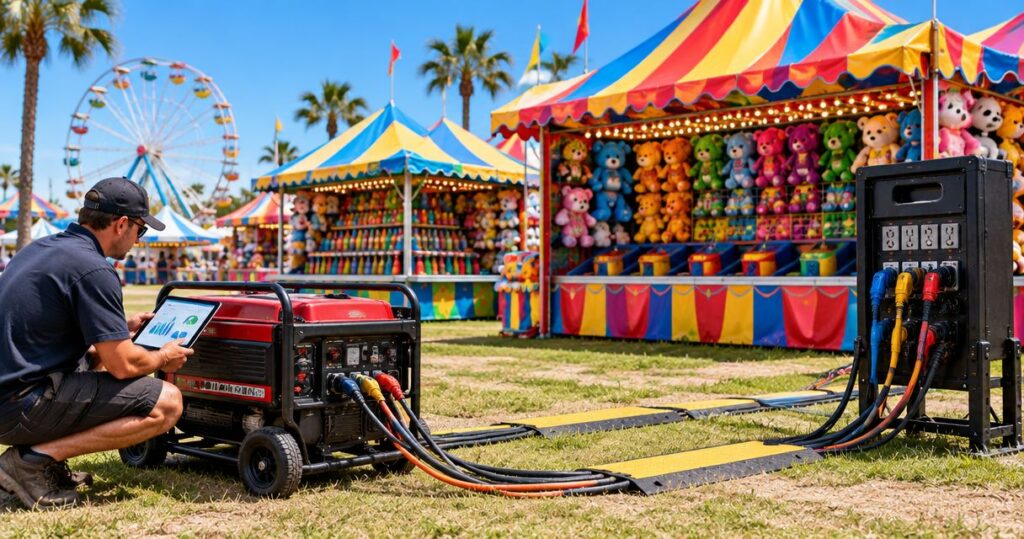
Instead of guessing which carnival games can share an outlet, plan carnival game rental power requirements from the selected equipment’s electrical specifications, then assign each powered item to a verified circuit or generator connection. Use this workflow to build a power checklist before requesting your 2026 event quote.
- Confirm carnival game rental power requirements for each selected game; do not assume every carnival game needs electricity.
- Arizona Bounce Around suits planners comparing carnival games with other party rental equipment.
- Verify circuits, running loads and startup requirements before choosing generator power.
- Keep portable generators outdoors, at least 20 feet from buildings, with exhaust directed away from occupied areas.
Why this matters
An outlet location is not proof of usable electrical capacity. Several outlets can share a circuit, and games can compete with concession equipment, lighting or other venue loads.
For a backyard birthday, the main question is whether the planned equipment can use the home’s verified circuits. For a school carnival or corporate family event, you also need a clear assignment of responsibility between the venue, equipment provider and electrical contractor.
Arizona Bounce Around offers carnival games alongside inflatables, tents and concession equipment. That selection helps you plan activities together, but every powered item still needs its own electrical check.
Before you start
- Get the equipment details. Ask for electrical specifications and operating instructions for every selected game and accessory, including any separate blower, controller or lighting component.
- Get site access and permission. Identify who can verify circuits, approve generator placement and authorize cable routes. Bring a site sketch showing entrances, activity areas and nearby buildings.
- Check the hidden issue: shared circuits. Two outlets on different walls are not necessarily separate circuits. Have the venue’s authorized facilities contact or a qualified electrician confirm the circuit assignments before planning connections.
Do not order a generator from a game count alone. A manual game and a powered attraction are different electrical planning tasks, even if both appear on the same event equipment list.
Equipment inventory
Create your power worksheet
- Create a row for every game and supporting item. Add worksheet columns titled Equipment, Power needed, Voltage, Running load, Startup requirement, Connection, Location and Confirmed by.
- Ask the rental provider to identify which selected items need no electricity. Record that answer rather than judging from a photograph or equipment name.
- Copy electrical information from the equipment documentation. Keep watts and amperes clearly labeled; do not treat them as interchangeable.
- Add concessions, lighting, sound and other powered equipment supplied by anyone else. Include equipment that operates during setup, not just during guest hours.
Expected result: Every item has a confirmed electrical requirement or a clearly assigned follow-up question. An unresolved specification is not permission to connect the equipment.
Separate manual games from powered equipment
Use the table to organize your options, not to infer the requirements of a particular rental. Confirm each selected item with its provider.
| Equipment or power option | Best for | Practical benefit | Limitation to resolve |
|---|---|---|---|
| Confirmed nonpowered carnival games | Parties seeking fewer electrical connections | Removes those games from the electrical load calculation | Does not remove lighting or nearby concession needs |
| Powered carnival games | Activities that require electrical operation | Supports the selected game’s operating functions | Requires verified connections and operating specifications |
| Venue circuits | Sites with suitable, verified electrical access | Avoids adding a generator where existing power is adequate | Shared loads and cable distance need checking |
| Portable generator | Approved sites without suitable nearby electrical access | Provides a separate source for assigned equipment | Requires outdoor placement, fuel planning and suitable distribution |
For a Phoenix backyard party, start with the games the children will use, then confirm whether those choices require power. For a school or community carnival, group the inventory by activity area so each area has a defined power assignment.
Read the units correctly
For a simple electrical example, 120 volts multiplied by 10 amperes equals 1,200 volt-amperes. That calculation describes apparent power; it does not establish a motor’s startup demand or prove that a generator is suitable.
Use the manufacturer’s stated requirements rather than a generic watts-per-game estimate. Ask the equipment provider or electrical professional to resolve missing information and any difference between running and startup demand.
Site power and distribution
Verify the available circuits
- Mark the proposed location of each powered item on your site sketch. Draw the actual cable route rather than measuring only the straight-line distance to an outlet.
- Ask the venue to identify the circuit serving each proposed connection and its existing loads. Have an authorized person verify the information; do not open electrical panels yourself.
- Have the responsible electrical professional confirm circuit suitability, required ground-fault protection and appropriate distribution equipment.
- Assign each powered item to its approved connection. Record the assignment in the worksheet and label the plan so setup staff can follow it.
Expected result: Each powered item has an identified source, an approved route and a person responsible for confirming the connection.
For your 2026 planning worksheet, distinguish Outlet location from Circuit assignment. Keeping those fields separate prevents a site map from being mistaken for an electrical assessment.
Check cable routes against guest movement
Plan cable routes alongside game queues, prize tables and entrances. A route that looks clear on an empty lawn can cross the exact space where families gather after the games open.
Ask the provider or electrical contractor to specify suitable cord type, conductor size, length and connection protection. Do not solve a long route by joining miscellaneous household cords or adding power strips.
At home, include the path between the patio and activity area. At schools, include classroom exits and accessible routes. At corporate and community events, include vendor access and service paths as well as public circulation.
Prepare the power handoff
Give the venue and rental provider the same marked plan. Include the event address, equipment locations, approved connections, cable routes and the person authorized to approve changes.
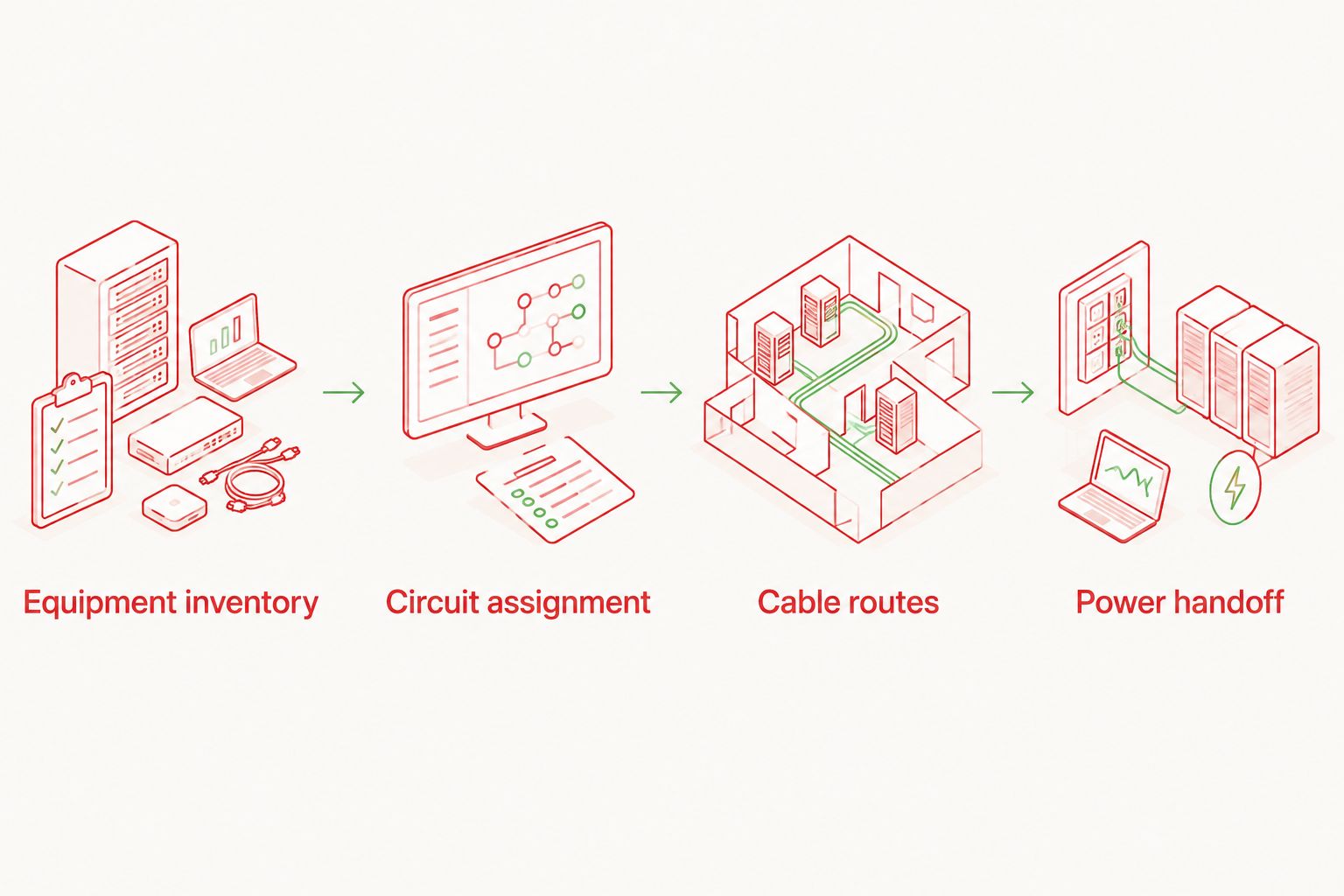
Keep a copy of the plan with the event lead. If equipment moves, reassess its power route before reconnecting it. A convenient new location is not automatically an approved connection point.
Generator selection and operating plan
Confirm whether a generator is necessary
- Compare the verified venue circuits with the complete equipment inventory. Identify the items that lack suitable power rather than moving everything to a generator by default.
- Give the generator provider the documented voltage, running loads, startup requirements and intended simultaneous operation. Include the proposed cable routes and connection types.
- Ask the provider to select the generator and distribution arrangement for those requirements. Confirm continuous output, startup capability and individual connection limits—not just an advertised maximum rating.
- Confirm who supplies, positions, connects, operates and fuels the generator. Record the shutdown procedure and the person authorized to carry it out.
Expected result: The generator arrangement matches the documented equipment and has an assigned operator, approved location and operating procedure.
A larger headline wattage does not settle every question. A generator also needs compatible connections and a distribution plan that supports the assigned loads.
For an event that combines games and inflatables, use the bounce house rental generator planning guide to prepare the inflatable portion of the equipment inventory. Keep the final power assessment combined so separate activity plans do not claim the same circuit.
Set the generator location before delivery
The U.S. Consumer Product Safety Commission advises operating portable generators outdoors, at least 20 feet from buildings, with exhaust directed away from windows, doors and vents. Apply that guidance to your 2026 site plan, and follow the generator manufacturer’s instructions and venue requirements.
Never operate a portable generator inside a garage, building or tent. An open door does not make an enclosed location acceptable.
Keep guests away from the generator and its hot surfaces. Have the provider resolve weather protection, fuel storage and refueling arrangements before setup; do not improvise a cover or refuel a running or hot generator.
Confirm the event-day sequence
Ask the responsible provider to document the connection, startup and shutdown sequence for the actual equipment. Have authorized personnel verify operation before guests enter the activity area.
For a backyard family party, keep the approved plan with the adult coordinating setup. For a school, corporate or community event, distribute it to the venue contact, event lead and relevant vendors.
When your equipment list changes
Recheck power whenever equipment, location or operating times change. Adding a concession machine after the games are assigned can change the circuit plan even when the game list stays identical.
- Update the inventory with the added or substituted equipment’s documented requirements.
- Tell the venue and equipment providers which items will operate together. Do not assume staggered use unless someone is responsible for maintaining that schedule.
- Reconfirm source assignments, cable routes and generator suitability before approving the revised layout.
- Replace the old plan and send the current version to everyone responsible for setup.
Keep a revision date on your 2026 power plan. Otherwise, a volunteer can arrive with an earlier layout while the delivery team follows the changed version.
For a birthday party, this check might follow the addition of food equipment. For a larger Arizona event, it can follow a new vendor, an extended evening program or a relocated activity area.
Troubleshooting
A breaker trips when equipment starts
Stop using the affected connection and notify the responsible provider or venue contact. Have an authorized person check connected loads, startup requirements and equipment condition before restarting. Do not repeatedly reset the breaker or bypass protection.
The outlet is farther away than the layout showed
Pause the connection and measure the actual route. Ask the provider to approve an appropriate cable arrangement or a different location; do not extend the route with unapproved cords.
A generator runs, but equipment will not operate correctly
Stop the affected equipment and have the provider check the connection, output compatibility, distribution limits and startup requirements. Do not assume the generator’s total rating proves that every outlet can supply every load.
The approved location blocks a queue or exit
Keep that route clear and have the event lead coordinate a revised placement. Recheck cable routing and electrical suitability before reconnecting anything moved.
Rain or water reaches the electrical setup
Keep guests away and have the authorized operator follow the shutdown procedure. Do not handle wet connections or restart equipment until the responsible provider has assessed the setup.
Customize your workflow
Send Arizona Bounce Around a qualified request that explains both the activities and the site. Ask for help choosing equipment, and clarify delivery, setup and power responsibilities rather than assuming they are included in a particular arrangement.
Include:
- Event basics: Your 2026 date, guest hours, setup window, address and venue contact.
- Audience: Children’s ages or the expected mix of children and adults.
- Equipment: Preferred games and any inflatables, concessions or other powered items.
- Site details: Surface, access route, activity layout and measured cable routes.
- Verified power: Circuit information supplied by the venue and unresolved electrical questions.
- Responsibilities: Who approves placement, supplies electrical distribution and handles generator operation.
Start with the actual venue details in Phoenix, Scottsdale, Chandler or Mesa. For a larger event elsewhere in Arizona, request delivery and setup confirmation for that location as part of the quote.
Arizona Bounce Around is best suited to planners comparing carnival games with other party rental equipment. The final equipment choice still depends on the site, audience and confirmed setup requirements.
FAQ
Do all carnival game rentals need electricity?
No. Confirm each selected game’s requirements with its provider; manual games and powered games have different needs. Include separate lighting and concession equipment in the power inventory.
How do I calculate carnival game rental power requirements?
Start with the documented electrical requirements for every selected item, including voltage, running load and startup requirements. Have the equipment provider or a qualified electrical professional match the combined loads to suitable circuits or generator connections.
Can I plug carnival games into backyard outlets?
Use backyard outlets only after their circuits, existing loads and suitability have been verified. Separate outlets can share a circuit, so outlet count alone does not establish capacity.
What size generator do I need for carnival games?
Generator size depends on the selected equipment’s documented running loads, startup requirements and simultaneous operation. Give those details to the generator provider rather than choosing from the number of games.
How far should a portable generator be from a building?
The U.S. Consumer Product Safety Commission advises keeping portable generators outdoors at least 20 feet from buildings, with exhaust directed away from windows, doors and vents. Follow manufacturer instructions and venue requirements as well.
Can a generator sit under the party tent?
Do not operate a portable generator inside a party tent. Have the provider establish a suitable outdoor location and resolve weather protection without enclosing the generator.
What should I send Arizona Bounce Around for a power-planning quote?
Send the event address, date, equipment preferences, layout, verified circuit information and measured cable routes. Identify who will confirm electrical suitability and ask how delivery, setup and generator responsibilities will be handled.
One last thing
A guest-ready layout is not necessarily a power-ready layout. Before accepting the final setup, have the responsible providers check the equipment while the planned loads operate together—not merely one game at a time.
That check connects the worksheet to the event you are actually hosting. Keep unverified changes off the live setup until the responsible person approves them.
Related guides
- How to plan carnival game queues and prize stations
- Concession rentals for school events: a volunteer checklist
- Tent rentals for Phoenix outdoor weddings