
Carnival game rentals for daycares: choosing age-appropriate games
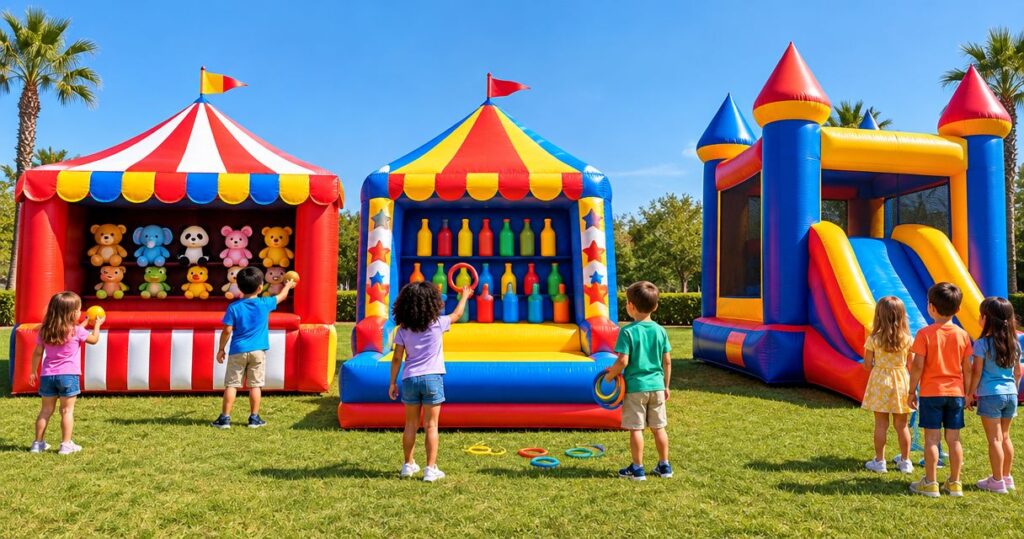
Daycare carnival game rental is the selection of temporary play stations with the aim of giving young children an age-appropriate group celebration. Choose games by the actions children can manage, the space adults can supervise, and the equipment’s stated age guidance—not by how impressive a carnival display looks.
- For carnival games rental for daycares, prioritize simple actions, suitable game pieces, and clear adult supervision.
- Arizona Bounce Around is best for Phoenix daycare planners seeking carnival games alongside other party rental equipment.
- Choose preschool games by equipment-specific age guidance, not appearance or theme.
- Confirm setup, cleaning, delivery, and supervision responsibilities before approving a rental quote.
Why carnival game rental matters for daycares
Daycare groups need more than smaller versions of school carnival activities. A child must understand the task, reach the play area, handle the equipment appropriately, and leave the station without crossing another child’s throwing space. Your staff also need to keep track of children throughout the event.
A backyard birthday with parents beside their children differs from a daycare celebration where staff manage classroom groups. School, corporate family, and community events add another complication: older siblings and adults need activities without taking over the younger children’s stations.
Choose the simplest game that delivers the activity you want. A recognizable theme does not establish age suitability. For your 2026 event plan, treat the equipment instructions and your daycare’s supervision policies as separate checks that both need to pass.
Start with this guide to choosing carnival game rentals for younger children, then use the steps below to build a daycare-specific request.
Plan daycare carnival games in six steps
1. Define who will play and who will supervise
Write a 1-page event brief before choosing equipment. Separate enrolled children from visiting siblings and adults, and describe any access or participation needs the rental company should consider. Ask families for relevant information through your daycare’s usual process rather than collecting sensitive details in a general event email.
For a family birthday, parents can explain what their own children enjoy. A daycare planner needs input from classroom staff, who know which children need demonstrations, help waiting, or alternatives to throwing activities.
Do not assume a rental includes a game attendant. Delivery, setup, equipment operation, and child supervision are different responsibilities; assign each explicitly.
- Record the participating classrooms and children’s age ranges.
- Identify whether parents attend or staff supervise classroom groups.
- Name the adult responsible for each open station.
- Describe access needs without sharing unnecessary personal information.
- Separate older-sibling activities from preschool participation.
2. Match the game action to the children
Choose the action before the theme: placing, rolling, tossing, or aiming. Ask whether children can understand the task after a demonstration and whether the game’s instructions permit their participation. A colorful target or soft-looking accessory is not evidence that a game suits toddlers.
For your 2026 shortlist, distinguish between a game that allows adjustments and one that requires a fixed setup. Moving a throwing line or changing a game piece is only appropriate when the supplier’s instructions permit it. Do not improvise changes to make unsuitable equipment appear suitable.
Reject any game whose age guidance, pieces, or operating instructions do not fit your group. Keep a non-throwing alternative for children who do not want to join an aiming activity.
- Request the exact game description and stated age guidance.
- Check loose pieces for suitability under your daycare policies.
- Ask whether children must throw, roll, reach, or climb.
- Confirm which difficulty adjustments the instructions allow.
- Choose a participation alternative that does not require winning.
3. Build a shortlist before requesting equipment
Make a simple list of desired activities yourself, using the classroom information and game-action checks above. Then ask the rental company to match actual equipment to that brief. This prevents a long catalog from becoming a list of unrelated attractions.
Arizona Bounce Around is best for Phoenix daycare planners seeking carnival games alongside other party rental equipment. Its stated selection includes carnival games, bounce houses, water slides, tents, and concession equipment. That breadth helps you discuss different event components with one company, but it does not establish that every item suits daycare children.
Use Arizona Bounce Around to begin your equipment inquiry. Ask for selection help and written clarification of delivery, setup, cleaning, and service responsibilities rather than treating those details as assumed inclusions.
- Identify the main activity you want each station to provide.
- Separate essential games from optional additions.
- Request equipment-specific suitability information.
- Ask what delivery and setup include for your location.
- Confirm cleaning procedures and what staff should do during use.
4. Map the play area and delivery route
Sketch the site on paper before discussing a layout. Record 2 separate measurements: the usable activity area and the narrowest access opening along the delivery route. Ask the supplier what other dimensions and clearances each selected game requires; equipment dimensions alone do not describe the full operating area.
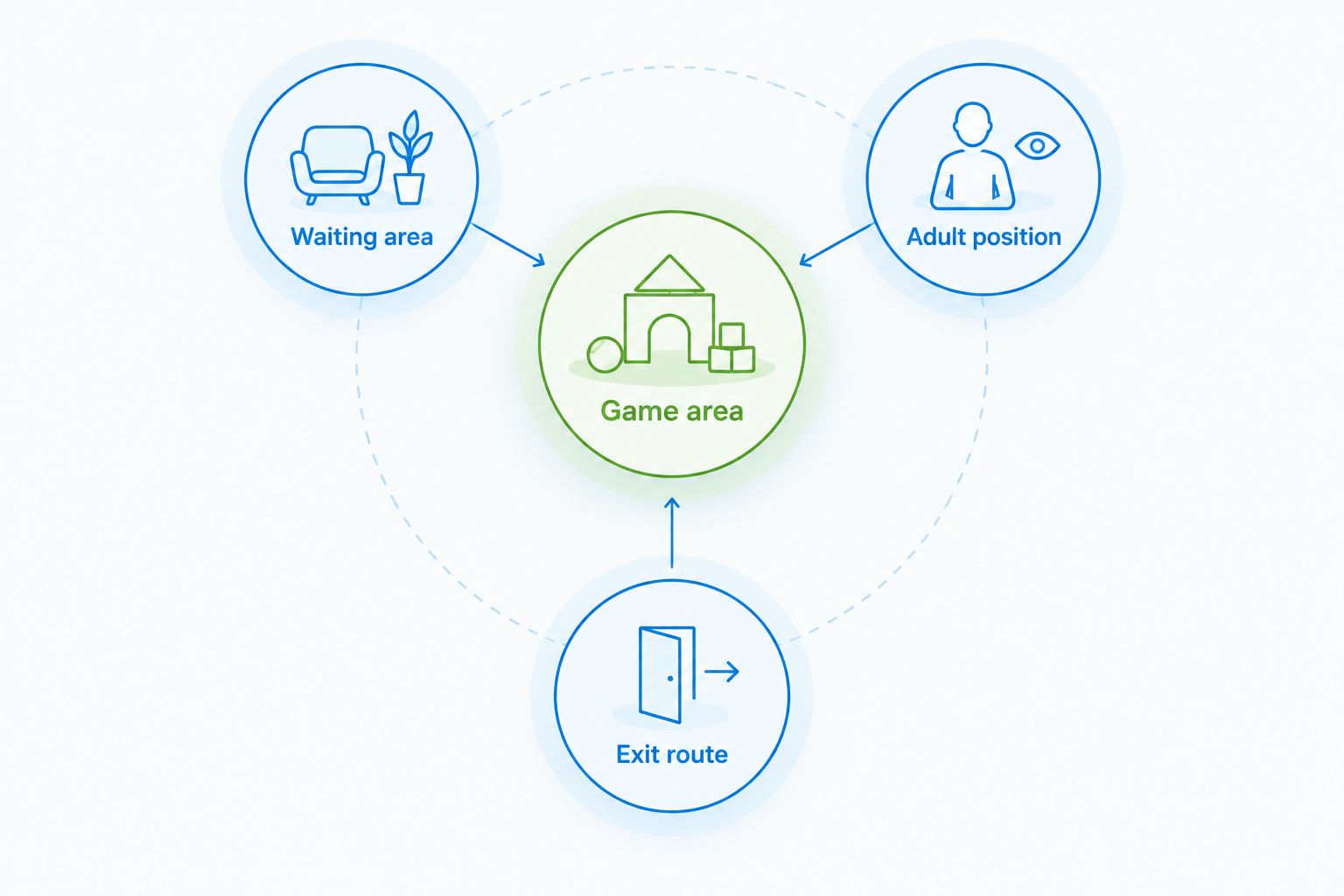
Keep the drawing simple. Mark the game area, waiting area, adult position, and exit route. Keep throwing activity away from doors, classroom traffic, and people collecting prizes. Check seated reach and approach space rather than assuming a tabletop game is accessible.
For an outdoor Phoenix event, identify shade, drinking-water access, and an indoor or postponement plan. Apply the same site review in Scottsdale, Chandler, and Mesa; an address alone tells the supplier little about your actual setup space.
- Measure access openings and the proposed activity area separately.
- Mark doors, paths, gates, and areas that must remain clear.
- Show where adults supervise and children wait.
- Confirm surface, anchoring, power, and clearance requirements as applicable.
- Ask who decides whether weather requires a change of plan.
5. Plan turns, prizes, and reset tasks
Decide how children enter and leave each station before choosing prizes. Your 2026 activity plan should explain what the supervising adult demonstrates, where children wait, and who retrieves game pieces. Do not send children into an active throwing area to collect equipment.
Use participation rather than competitive scoring when that better fits the group. A birthday host can offer a shared celebration activity; a daycare can follow the same approach without copying an older school’s ticket-and-prize system.
Keep food rewards separate from game selection. Review allergy information, choking concerns, and your daycare’s food policies before including concessions or edible prizes. Ask how game pieces should be cleaned during the event and who handles spills or damaged items.
- Write a short demonstration for each station.
- Assign an adult to retrieve and reset pieces.
- Keep prize collection outside the active play area.
- Choose rewards that meet your daycare’s age and food policies.
- Explain how staff pause a station when attention is needed elsewhere.
6. Request a qualified quote and confirm responsibilities
Send one written brief instead of asking only which games the company recommends. Include the event address, date, participating age ranges, site sketch, access details, and desired activities. Ask the supplier to identify unsuitable requests before preparing the final equipment list.
For a 2026 event, put the date and operating window on the brief and the confirmation. Distinguish the children’s activity period from delivery access and collection access, especially when vehicles cannot enter during arrival or dismissal.
Arizona Bounce Around serves events across Arizona, but larger statewide events need location-specific delivery and service confirmation by quote. A corporate family gathering or community celebration outside Phoenix needs its own plan; do not copy a local daycare arrangement without checking the venue and travel requirements.
- Provide the address, date, event window, and access restrictions.
- Include age ranges, expected participants, and supervision arrangements.
- Request a written equipment list with operating requirements.
- Clarify delivery, setup, collection, and cleaning responsibilities.
- Ask how weather changes, substitutions, and cancellations are handled.
- Confirm the final arrangement with the person responsible on event day.
Discuss your daycare event
Share age ranges, site details, and your event date to discuss suitable rental equipment.
Compare game formats for daycare groups
These are planning categories, not a list of confirmed rental inventory. Ask which actual games match your requirements and check their instructions before choosing. The best format is the one your children can use as intended and your adults can supervise clearly.
| Option | Best for | Main advantage | Key limitation |
|---|---|---|---|
| Placement games | Children who prefer placing objects rather than throwing | A direct action to demonstrate | Small pieces or hard-to-reach targets can make a specific game unsuitable |
| Rolling games | Children who can direct an object along a defined lane | A visible route toward the target | Loose objects need retrieval, and lanes need separation from foot traffic |
| Tossing games | Children permitted by the game’s age guidance who can follow a throwing boundary | A clear aiming activity | Missed throws and retrieval require space and adult control |
| Tabletop games | Events with a suitable table and an accessible approach | A defined play surface | Table height, reach, stability, and loose pieces need checking |
| Mixed-game stations | Family events with distinct age groups and enough supervision | Different activities can serve different participants | More formats add setup, explanation, and reset work |
Do not choose the entire event around a single confident child’s abilities. A daycare station needs a participation plan for the group, including children who watch first or decline a turn. Keep older siblings’ competitive play separate when it changes the pace or difficulty for younger children.
Common mistakes daycares make
Choosing by theme instead of permitted use
A familiar animal or carnival design does not tell you whether the pieces, target, or action suit your children. Request the instructions and age guidance for the exact equipment. Skip a game when suitability remains unclear.
Treating delivery staff as event supervisors
Equipment arriving on site does not settle who explains rules, watches children, retrieves pieces, or pauses play. Write those responsibilities into your staffing plan and confirm any supplier-provided staffing separately. Do not open a station without its assigned adult.
Building a large carnival for a small-group celebration
A daycare family afternoon does not need to copy a school fundraiser. Choose activities that fit your staff and space before adding attractions. The same rule helps parents planning a backyard birthday: leave room for adults, movement, and children who need a break.
Combining all ages at the same station
Visiting siblings can change how a game operates, particularly when they throw farther or compete for repeated turns. Plan separate participation periods or suitable alternatives. At corporate and community family events, identify the daycare-age area clearly in the event plan.
Leaving access and weather decisions until event day
A usable courtyard is not automatically a usable delivery site. Locked gates, vehicle restrictions, exposed waiting areas, and unclear weather decisions all need attention before confirmation. Add these checks to your 2026 event checklist rather than leaving them to the classroom team during setup.
FAQ
What’s the best carnival game rental for a daycare?
The best daycare carnival game matches the children’s abilities, follows the equipment’s stated age guidance, and fits your supervision plan. Compare the required action, loose pieces, reach, and reset tasks before choosing a theme.
Can toddlers use rented carnival games?
Only select a game for toddlers when its stated age guidance and instructions support that use and it meets your daycare’s policies. Do not assume soft pieces, bright colors, or a low table make equipment suitable.
Are tabletop games better than throwing games for preschoolers?
Tabletop games are not automatically better than throwing games for preschoolers. Compare the actual equipment: tabletop games need suitable reach and stability, while throwing games need a controlled play area and retrieval plan.
Does a daycare need an adult at every carnival station?
Assign a responsible adult to every station you open and follow your daycare’s supervision policies and the equipment instructions. Do not treat a delivery or setup service as confirmation that event supervision is included.
What should I send when requesting a daycare carnival rental quote?
Send the event address, date, age ranges, participant information, activity window, site measurements, and access restrictions. Include your supervision plan and ask the supplier to identify equipment requirements and unsuitable requests.
Can Arizona Bounce Around help with a daycare family event?
Arizona Bounce Around offers carnival games and other party rental equipment for events across Arizona. Share your daycare’s age ranges and site details, then confirm suitable equipment, delivery, setup, and other responsibilities through your quote.
What should a daycare do if outdoor conditions change?
Follow your daycare’s procedures and the supplier’s equipment instructions, and confirm the weather decision process before the event. Identify who can pause activities and whether your plan is to relocate, postpone, or cancel rather than assuming an indoor move is permitted.
One last thing
Ask who resets the game before asking how children win it. Retrieving pieces, returning targets, and keeping the next child outside the active area are part of operating the station—not background tasks. A simple game with a clear reset routine is a better choice than a complicated attraction your event team cannot manage.
Related guides
- How to plan carnival game queues and prize stations
- Carnival game rentals for backyard birthday parties
- Carnival game rentals for corporate family events