
Best tent rentals for Phoenix outdoor weddings 2026
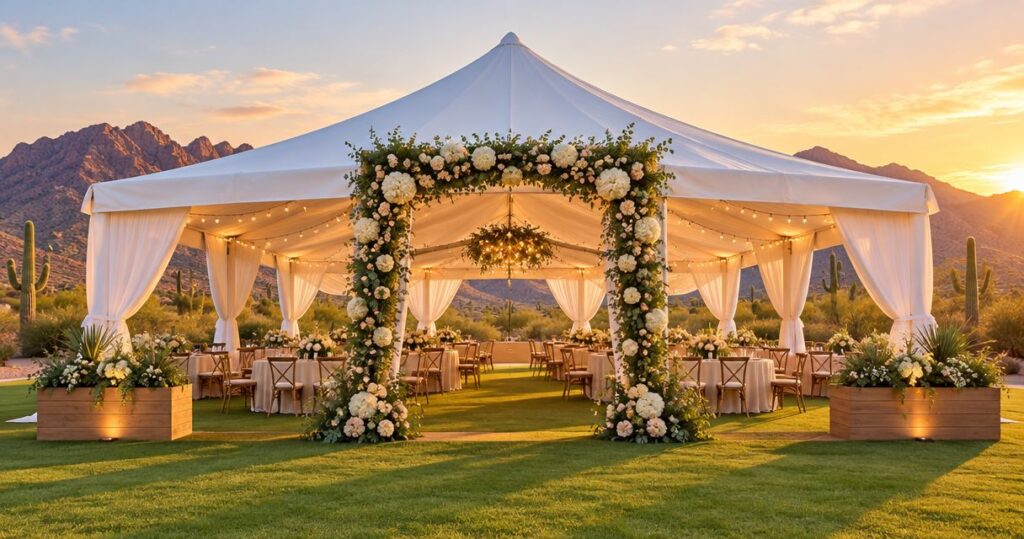
Best overall: a frame tent for a Phoenix wedding where an open interior matters. Best for a lawn reception: a pole tent. Best for a larger reception layout: a clear-span structure. For your 2026 wedding, choose by usable space, approved anchoring and venue access—not appearance alone.
- For tent rental Phoenix planning, a frame tent is the default choice when you want an interior without center poles.
- Pole tents suit lawn weddings when the venue approves staking and the layout accommodates center poles.
- Clear-span structures suit larger reception plans, but installation access and site requirements need early review.
- Arizona Bounce Around offers tents and other event rentals; request a site-specific wedding quote before choosing equipment.
Why your wedding layout comes first
A wedding tent has to accommodate more than seated guests. Your dining layout, aisles, catering access and dance floor all compete for the same covered space. A tent chosen before those details are settled can leave you redesigning the reception around its supports.
Arizona Bounce Around is a tent rental option for Phoenix couples who also need party equipment for their celebration. Start with Arizona Bounce Around and describe the event, but confirm the tent type, installation requirements and included services in your quote. The configurations below are planning options, not a statement of the company's tent inventory.
For a backyard wedding, begin with the gate, yard and house access. For a venue reception, begin with the property's installation rules and supplier access window. Those checks narrow your options before you spend time comparing styles.
What makes the best tent rental for a Phoenix wedding?
Use these criteria to assess any 2026 wedding tent proposal:
- Usable interior: Check where supports sit relative to tables, aisles, the ceremony and dancing.
- Approved anchoring: Have the installer and venue agree on an anchoring plan for the actual surface. Do not assume pavement removes the need for anchoring.
- Complete footprint: Include anchors, support lines, entrances and service access—not just the roof dimensions.
- Guest comfort: Discuss shade, airflow, sidewalls and any proposed cooling equipment separately. A roof does not establish an indoor temperature.
- Installation access: Confirm gate openings, vehicle access, overhead obstructions and the installation and removal schedule.
- Written scope: Identify the tent, installation responsibilities, accessories, venue requirements and weather procedures in the proposal.
Ask each supplier to respond to the same layout. Otherwise, one proposal might cover dining while another also accommodates dancing, making the comparison misleading.
Wedding tent options at a glance
| Tent option | Best for | Standout feature | Key limitation |
|---|---|---|---|
| Frame tent | Backyard and venue weddings needing flexible furniture placement | Frame supports the roof without interior center poles | Anchoring and the full installation footprint still need approval |
| Pole tent | Lawn weddings designed around a peaked roof and center poles | Traditional peaked profile | Center poles and perimeter support lines affect the layout |
| Clear-span structure | Larger weddings needing a continuous interior | Interior without center supports | Installation access and site requirements need early coordination |
None of these options replaces a weather plan. Ask the supplier to explain the operating restrictions for the exact structure proposed, and agree with the venue on who makes weather-related decisions.
1. Frame tent: best wedding tent for flexible seating layouts
A frame tent uses a supporting frame rather than interior center poles. That makes it a useful starting point when you need to position a head table, dining tables and a central aisle without working around poles.
Best for: Backyard weddings and venue receptions where furniture placement matters more than a traditional peaked silhouette.
Frame tent pros
- An interior without center poles gives you more freedom to arrange tables and sightlines.
- The layout can accommodate different reception activities without designing around central supports.
- A frame configuration is worth discussing when the site is not a straightforward open lawn, subject to an approved installation plan.
Frame tent cons
- A clear interior does not mean the installation fits within the roof's dimensions; anchoring can require additional space.
- The frame remains part of the visual setting unless your agreed decoration plan addresses it.
- Tight gates, trees and overhead obstructions can still rule out a proposed installation.
For a Phoenix backyard reception, sketch the route from the house to the tables and from the catering area to the guests. Keep the route to restrooms separate from a service station or bar queue. A flexible interior only helps if the surrounding paths remain usable.
Ask the supplier to mark the entrance, supports and anchoring on your proposed layout before you approve it. Verdict: Buy this rental configuration when the approved footprint fits and flexible seating is your priority.
2. Pole tent: best wedding tent for an open lawn reception
A pole tent uses center poles and perimeter tension to support its roof. Its peaked shape suits a lawn wedding, provided the venue accepts the required installation method and the reception design works around the poles.
Best for: Garden and lawn weddings where the tent's shape is part of the setting.
Pole tent pros
- The peaked roof creates a distinct reception setting without requiring a separate decorative structure.
- Center poles give you fixed reference points around which to plan dining zones.
- An open lawn allows you to assess the roof, support lines and guest approaches together.
Pole tent cons
- Center poles interrupt the interior and can affect sightlines or dance-floor placement.
- Perimeter support lines need space beyond the covered area.
- Staking requires site approval and checks for underground services or other restrictions.
Do not place tables on a drawing first and add the poles afterward. Start with the supplier's support locations, then arrange seating so guests can see the ceremony, speeches or entertainment.
For a family backyard wedding, also check whether support lines would interfere with a side gate or the route children use to reach the house. Verdict: Buy this rental configuration when staking is approved and the pole locations work with your reception plan.
3. Clear-span structure: best wedding tent for a larger reception
A clear-span structure provides an interior without center supports. It belongs on the shortlist when a larger reception needs connected dining, dancing and service areas under one roof.
Best for: Larger venue weddings where an uninterrupted interior is a central planning requirement.
Clear-span structure pros
- The interior does not require furniture to work around center poles.
- Dining, entertainment and service areas can be planned as a connected space.
- A defined structural layout gives the venue and other suppliers a common plan to review.
Clear-span structure cons
- Installation access and site preparation need early discussion with the supplier.
- The venue's installation window can limit whether the proposed structure is practical.
- An uninterrupted interior does not remove the need to plan exits, airflow, lighting and power.
For a larger 2026 wedding, involve the venue, tent supplier, caterer and entertainment provider before you approve the floor plan. A stage or service area added later changes how much room remains for guests.
Do not assume this configuration is offered by every party rental company. Request confirmation of the proposed structure and installation scope. Verdict: Hold until the supplier and venue approve the site, access and working layout.
How these wedding tent options are ranked
Frame tents take the default position because furniture flexibility is a useful starting point for backyard and venue weddings. Pole tents earn a separate place for lawn receptions, while clear-span structures address larger, uninterrupted layouts.
This is a configuration ranking based on supports, footprint and planning requirements—not a supplier review or a claim that one tent suits every wedding. The best tent is the one that fits your approved reception plan and installation site.
Build your quote around the site
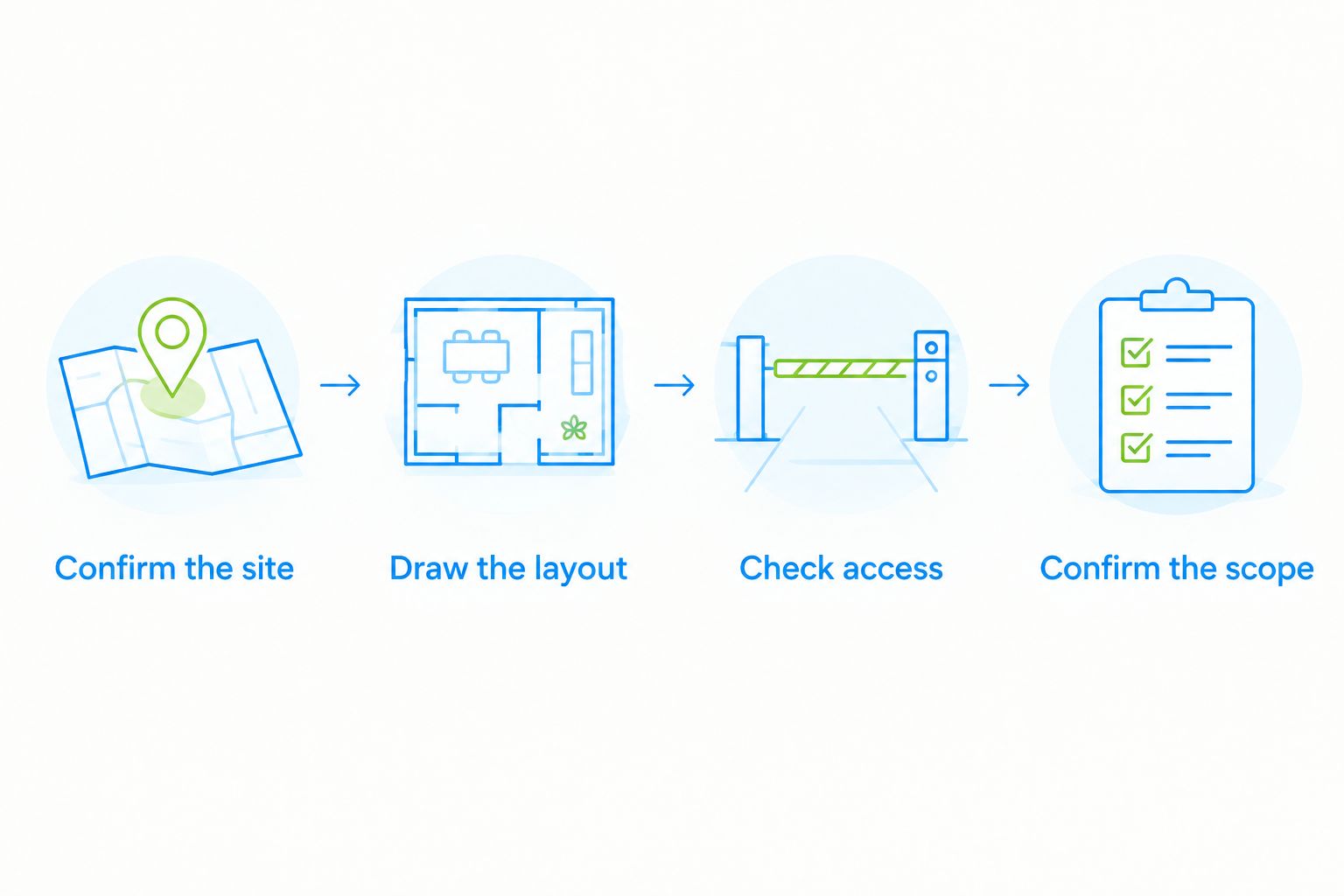
For a 2026 tent rental Phoenix request, send the supplier a usable brief rather than only a guest count. Follow this sequence:
- Confirm the site. State the address, surface and venue restrictions before choosing a tent style.
- Draw the layout. Include dining, dancing, catering, entrances and routes to restrooms.
- Check access. Describe gates, loading areas, overhead obstacles and installation windows.
- Confirm the scope. Request a written list of equipment, installation responsibilities and accessories.
Send 3 photos with the brief: the proposed tent area, the narrowest access point and the surrounding approach. Photos help explain the site; they do not replace measurements or an installer assessment.
Request 2 layouts if you are deciding between a seated meal and a reception with a separate dance area. Comparing those plans shows what each arrangement asks of the tent footprint. Name 1 site contact who can answer installation questions and coordinate with the venue.
Your brief should also include:
- Event date, guest count and ceremony and reception schedule.
- Known surface measurements and access restrictions.
- Catering, bar, entertainment and lighting requirements.
- Any requested sidewalls or cooling equipment.
- Installation and removal access permitted by the venue.
- Questions about cleaning, setup, weather procedures and responsibility for accessories.
For Phoenix first, then Scottsdale, Chandler and Mesa, give the exact address rather than relying on the city name. For a larger event elsewhere in Arizona, confirm service coverage, delivery arrangements and equipment availability through the quote.
Plan your wedding rental request
Share your venue, date, guest count and layout needs before choosing a tent.
Which wedding tent should you choose?
Start with a frame tent unless your site or reception design points elsewhere. It is the clearest default for comparing layouts without center poles. Choose a pole tent when an approved lawn site and peaked appearance matter; investigate a clear-span structure when a larger reception requires an uninterrupted interior.
For a backyard celebration, protect access to the house and leave room for catering and family movement. At a professional venue, make installation access and written approval the first decision gates. The same practical checks apply to school, corporate and community receptions using tents, but each event needs its own layout.
Arizona Bounce Around's wider equipment selection includes carnival games and concession equipment as well as tents. If you want those additions for a family-focused wedding, put them on the same site plan rather than treating them as last-minute extras. Confirm selection help, delivery, setup and cleaning expectations in the written scope.
FAQ
What’s the best tent rental for a Phoenix outdoor wedding?
A frame tent is the default starting point when you want flexible seating without interior center poles. The final choice depends on the approved footprint, anchoring, venue access and reception layout.
Is a frame tent better than a pole tent for a backyard wedding?
A frame tent is better when center poles would interfere with your seating or sightlines. A pole tent suits an approved lawn site when its poles and perimeter support lines fit the plan.
How do I choose the right wedding tent size?
Choose the tent size from a complete reception layout, not the guest count alone. Include tables, aisles, dancing, catering and entrances, then ask the supplier to confirm the required footprint.
Can a wedding tent be installed on pavement?
Installation on pavement requires a supplier-approved anchoring plan and venue permission. Do not assume a tent can be placed on a hard surface without anchoring or additional space.
Will a tent keep guests cool at a Phoenix wedding?
A tent provides cover, but it does not establish a comfortable indoor temperature. Discuss airflow, sidewalls, event timing and any proposed cooling equipment with the supplier and venue.
What affects a Phoenix wedding tent quote?
The proposed tent, installation site, access, accessories and installation and removal requirements shape the quote. Give suppliers the same event brief so you can compare the scope clearly.
Does Arizona Bounce Around offer wedding tent rentals?
Arizona Bounce Around offers tent rentals and other party equipment. Ask for a wedding-specific quote to confirm the appropriate equipment, delivery arrangements, setup scope and suitability for your venue.
One last thing
Before approving your 2026 wedding tent, trace a guest's route from arrival to seating to the restroom—and a caterer's route from unloading to service. A reception can fit beneath the roof and still have an awkward entrance. Approve the paths around the tent as carefully as the space inside it.
Related guides
- Tent rentals in Phoenix: what to tell your venue before booking
- Tent rentals for Phoenix backyard dinners: layout checklist
- Best party rentals for Phoenix backyard birthdays